If you’re in Australia, you will probably understand my frustration at the moment. The government decided to install a wonderful new National Broadband Network which would give us the most wonderful fast internet across the country.
It has cost the country a fortune and has been nothing but a headache to anyone who has been forced to instal it.
Our telecommunications provider is Telstra. The NBN technician came on time on the 9th October as organised previously and he was very helpful. He stayed while we set up the new modem which Telstra had previously sent us and then we tried to connect. Surprise! Surprise! Nothing happened. We have no internet.
I rang the Telstra support number as I have done at least 7 times since, each time reaching a call centre in India. Each time I have been told that it would be fixed within 24 to 48 hours and that they would add data to my mobile phone so that I could access the internet that way. It certainly hasn’t been fixed (today is 18th October) and I haven’t had extra data put on my phone as they said. They have updated my monthly allowance considerably, at least. So we have been hotspotting our iPads and the laptop but I can’t seem to work out how to use my printer and the AppleTV.
I have been asking to speak to the supervisor but they are always busy. Today I was told that they would call me back in an hour but that hasn’t happened. I am told that we have a case manager and I have asked to speak to them but I’m told that they won’t talk to me. I’ve asked for an update and am told that the advice that it would be fixed in 24 or 48 hours is the update. When I ask why it takes so long I am told something has gone missing. What has gone missing? Can they replace the missing thing? Do we need a new modem? What is going on?
It is so annoying. We are long time customers of Telstra. We even have shares in Telstra!
Come on Telstra. Lift your game. This is not good enough. At least talk to us and tell us what the issues are.
I have, over the last 24 hours read a book which has touched me and brought a few tears to my eyes. Dani Shapiro is the author of Inheritance – A memoir of genealogy, paternity, and love. It is one of several books she has written. Growing up in an orthodox Jewish family, she was often told she did not look Jewish and she never saw herself in the faces around her. When she was 52, she did an Ancestry DNA test which showed she was no relation to Susie, with whom she supposedly shared a father.
She wrote this book as she tried to come to terms with this traumatic shock and as she and her husband tried to solve the mysteries of the identity of her birth father, a sperm donor, and how it all came about.
Similarly, at 54, after the death of my parents, I discovered that they were not my parents at all but had adopted me.
My feelings, as I solved my mysteries and discovered who I really am, were very similar to Dani’s. My DNA test came as the last part of the solution to my puzzle, rather than the beginning, as it proved that the man I had come to believe was my birth father, really was.
I really enjoyed reading this book and will ponder upon it a fair bit over the next few days, I reckon.
This book also resonated with me because of the window into the Jewish religion and its customs as my husband’s heritage is Jewish although he was not brought up in the faith.
It’s not often you find a new relative and there’s a treasure trove of information just waiting to be discovered.
I’m currently researching the lives of my grandfather, Seymour John HARRISON and his brother, Edward Toyler HARRISON. They served together in WWI and Edward died of gunshot wounds. In an endeavour to make my story as complete as possible, I have ordered a history of the 24th Battalion in which they served from an interstate library.
Whilst I wait, I am going back over information I found years ago and kept even though I wasn’t sure if it was about my lot or not. One of these led me to this discovery.
Edward and Seymour’s parents were John William Harrison and Harriet NORLEY. Harriet’s father and grandfather were both Thomas NORLEY. They all lived in the Beechworth/Bright goldfields area of Victoria Australia. My old finding was for the burial information of Alice Jane NORLEY, nee NEEDHAM. She died on 1 Mar 1944 and was buried in the Bright cemetery on 2 Mar 1944. She was married to a Thomas NORLEY. Now, this Thomas was Harriet’s brother so he is my GG uncle. And he was killed in the Great Boulder Mine disaster on 25 May 1904 at Kalgoorlie in Western Australia.
Four men, including Thomas, were killed in the bottom of the mine and the one man who was brought to the surface died in hospital. Here is a photo of the five. Thomas NORLEY is top right. The other men were Thomas Bates, John Robert Riseberry, Samuel Jones and James Caudwell Harper.
After such a disaster, there is of course an inquest and it found that it was accidental death but that the company had been careless in trying out a new method of lowering the gear without a test run when there were no men underneath it. It was found that the miner working at the top, Mr Reidle, was not to blame in any way.
The funeral was huge. The following is an extract from this article taken from Trove:
Shortly before 2 o’clock the funeral cortege was ready to start. The Masonic brethren, in regalia, to the number of about 160, were first to step slowly forward on the road that was to end in the departed men’s last long home. The I.O.O.F. and the M .U.I.O.O.F. in regalia, followed.
The mournful procession was headed by the
combined Boulder and A.W.A. Bands, assisted by representatives from the
Kalgoorlie Town Band, at a slow march, and as soon as the long array of
vehicles behind had got in motion they struck up the grand though solemn
strains of the “Dead March.”
The A.M.A. and the A.W.A. amalgamated for
the day in the presence of Death in such a distressing form, and they, to the
number of 300 or 400, marched behind the bands. The deceaseds’ late fellow-workers,
and the various sporting clubs with which Bates had been associated came next,
and then followed the Salvation Army Band, the members of which took their turn
in playing on the route to the cemetery.
The crowd which lined the streets in thousands
fell back sick and sad at heart as the five hearses came slowly through the
human lane opened before them. By each hearse marched six pallbearers, chosen,
from the different organisations to which the unfortunate deceased had
belonged. The five mourning coaches, containing relatives, followed, and then
came the vehicles belonging to the different mines and business people of
Boulder and Kalgoorlie. There were in all over 90 conveyances, and the cortege,
which took half an hour to pass any given point, was over a mile in length.
Apparently nearly every citizen of note was present, either as a member of some society or driving in the line of vehicles behind the hearses. The Mayor and Mrs. Rabbish represented the citizens of Boulder. and the Mayor of Kalgoorlie (Mr. Keenan) was in the next vehicle. Mr. R. Hamilton, the manager, and the Boulder mine officials, together with officials from the other mines on the belt,” were also present, so that the funeral was as representative of the community as it was possible to make it.
Thousands of people, after joining in or
seeing the funeral to the Boulder town boundaries, went by tram to Kalgoorlie,
and awaited the cortege at the cemetery. The Tram Co. had five single and six
bogie cars on the Boulder loop, and as fast as one filled it was sent in to
Kalgoorlie, and a fresh car took its place till the crush was relieved. The
deep impression the awful nature of the catastrophe had made up on the imagination
of the public was thoroughly evidenced by the large number of spectators who
had gathered in the central portion of Kalgoorlie hours before the arrival of
the procession of mourners, friends, and acquaintances from Boulder. Maritana Street
was lined with men, women, and children for the whole of its great length. The
bulk of the crush was at the intersection of that street with Hannan Street. As
the procession passed along the numbers of those who followed were swelled by
Kalgoorlie representatives of public bodies, friendly societies, and trades
unions. All heads were either bowed or uncovered as the combined bands
advanced, playing the mournful music of “The Dead March” in
“Saul,” and as the hearses and mourning coaches came into view and
passed on.
Long before the cortege reached the
Kalgoorlie Cemetery the trams had been very busy landing passengers from town
at a convenient point. They found their way to the place, and helped to swell
the number of residents of the northern part of the town, who had patiently
waited at the gravesides in the Anglican, Presbyterian, and Methodist portions
of the cemetery.
The combined bands ceased their rendering of “The Dead March” at the gates and the hearses, mourning coaches, Masonic brethren, and friendly societies’ members entered the sacred enclosure. The Freemasons and the Oddfellows ranged themselves round the open graves in the Anglican portion of the burying ground. The Rev. R. H. Moore, Rector of St. Matthew’s, Boulder, and the Rev. Cuthbert Hudleston, Rector of St. John’s, Kalgoorlie, who were attired in their priestly vestments: stood in readiness to take up their duties. The relatives of the deceased men, Thomas Bates, Thomas Norley, and John Risebery, took up positions at the foot of each grave. The graves were side by side. The vicinity was densely crowded. The beautiful service of the Church of England for the burial of the dead was begun by the Rev. R. H. Moore as the bearers brought the coffins and placed them on the trestles. The prayers were said by the Rev. Cuthbert Hudleston, and subsequently the Rev. Mr. Moore delivered an address to the assembled crowd from the lessons to be derived from the liturgy. He made reference to the touching incidents of the past two days, and remarked that whilst probably not one among them desired to die a lingering death, with all its painful episodes, yet he thought they would all agree in thinking it very hard to be hurried out of the world without preparation or without farewell to those who were left behind to mourn for departed ones. The present catastrophe had been terrible in its nature, but at the same time they ought to remember that the hand of God was in it.
The funeral procession
Thomas who was born 19 September 1863 and Alice had two small children, Violet Alice who would have turned 7 on the day after her father’s funeral and Geoffrey Maynell who was 3.
How sad would it all have been?
It looks as though Alice returned to the Bright area and her family as she was buried there on 2 Mar 1944.
So, as you can see, I’ve had a very interesting couple of days finding out about this branch of my family. A very distressing story though!
My thoughts are so confused today. I had two fathers. I never knew my birth father as he died when I was two but I’d been adopted out at birth anyway as a result of an ultimatum made to my mother by her mother who knew that children shouldn’t be in her care. My adopted father was a stern frightening man who rarely showed me love.
He did, however, see that I had an education which is a wonderful gift and I thank him for that most sincerely. I feel no love towards him though and I’m so angry at him that he never told me I was adopted, leaving me to discover this when he and my adopted mum were both dead.
His father was a lovely old granddad with a sense of fun & we got on well. I saw quite a bit of him from my teens on as we lived close to them. We would go for tea on Sunday nights and sometimes I’d stay with them in school holidays as they lived near the beach at Maroochydore in Queensland. They migrated to Australia in 1921 when my dad was seven. Granddad had been a British soldier in France in WWI.
I didn’t know my adopted Mum’s father very well at all. He died when I was seven but they lived in Melbourne and I can only remember a couple of visits. Mum had been brought up in a very strict religious family and I remember receiving religious texts for my birthdays and Christmas.
I’d like to have met my birth Dad. He had two other children, older than me, and they tell me he was a good Dad. I get the impression he was a bit of a lad and the photos seem to support that feeling. He was sent to Australia from England in 1914 by his older brothers and told to “make a man of himself”. He enlisted in the army but his records show that he had flat feet (that’s where I must get them from), couldn’t march, was invalided of a ship in Perth on the way to war and then went absent without leave. I’ve yet to really delve into the details of his life but I do know that he ran many concerts for the Red Cross in Melbourne between the wars. So definitely an interesting story to follow. I think his Dad was an upstanding man and I have met and am very close to a granddaughter of one of my father’s brothers who lives in Canada.
I think my birth mother’s father had a very sad life and I’m currently researching his story. He was born and grew up in the Beechworth area of Victoria where his grandfathers were both miners. He fought in the trenches in France and his brother was killed there. I think that has to have affected his whole life. How anyone could return to a ‘normal’ life after that, is beyond me.
So, I have more fathers and grandfathers than most. They are a motley crew. What an interesting evening we would have if I could have any one of them to dinner.
I’ve just read Struggle and Suffrage in Swindon – Women’s Lives And The Fight For Equality by Frances Bevan.
My first contact with Frances came about a few years ago when I searched for Radnor Street Cemetery on Facebook and her name popped up. I found that she researches the lives of the people buried in this old cemetery and writes their stories. She also leads tours of the cemetery on one Sunday per month through the warmer months. The cemetery is in Swindon, a railway town in Wiltshire about a ninety minute drive west of London. Consequently I can’t go on the tours but I can read her stories and since many of my Alley family, my paternal line, are buried there I really enjoy reading them.
In fact, it was through communicating with Frances that I found and have met some cousins who are very special to me. When Frances asked me if I knew Wendy Burrows who was also searching for information about Frederick Alley, it lead me on the journey to find my cousins. We went to Swindon where Frances, Wendy and her husband, Frank, David and I enjoyed a wonderful day together. We have since met and stayed with my lovely cousin, Kay Prosser, and her husband Ben in Victoria on Vancouver Island and they have been to stay with us in Brisbane. When you discover at 52 that you were adopted, finding and meeting and becoming close to your birth family is very special. It gives you back your sense of identity and you know where you fit in the world.
Reading about the women in my family in Struggle and Suffrage in Swindon is also special and I really appreciate the work that Frances does. My Grand Great Uncle, George Richman Alley had one son and seven daughters. The daughters are pictured Below. Amelia Annie Alley and her sister, Ethel Gertrude Alley had a millinery business at 90 Victoria Road. Ethel Gertrude Alley married William Hewer and they ran the Oddfellows’ Arms. The youngest sister Eva married George Babington and they opened a drapery store next door to the milliners. Mabel Alley was awarded the British Empire Medal for Meritorious Service in 1960 as she was sub Post Mistress at Westcott Place for more than fifty years.
Emma Louisa Hull, née Alley, another of the sisters, was a member of the Women’s Freedom League and was active in the fight for the vote for women. She was arrested twice and imprisoned for short times.
Eileen Kostitch, née Babington, was the daughter of Eva Alley & George Babington fought with the Yugoslavian forces against the Germans in World War II. She died there of ill health and is buried in Western Bosnia.
I think there have been some amazing women in my family!
Details of life in Swindon and of the women who fought for women’s rights can be found in this well researched book. I found it fascinating.
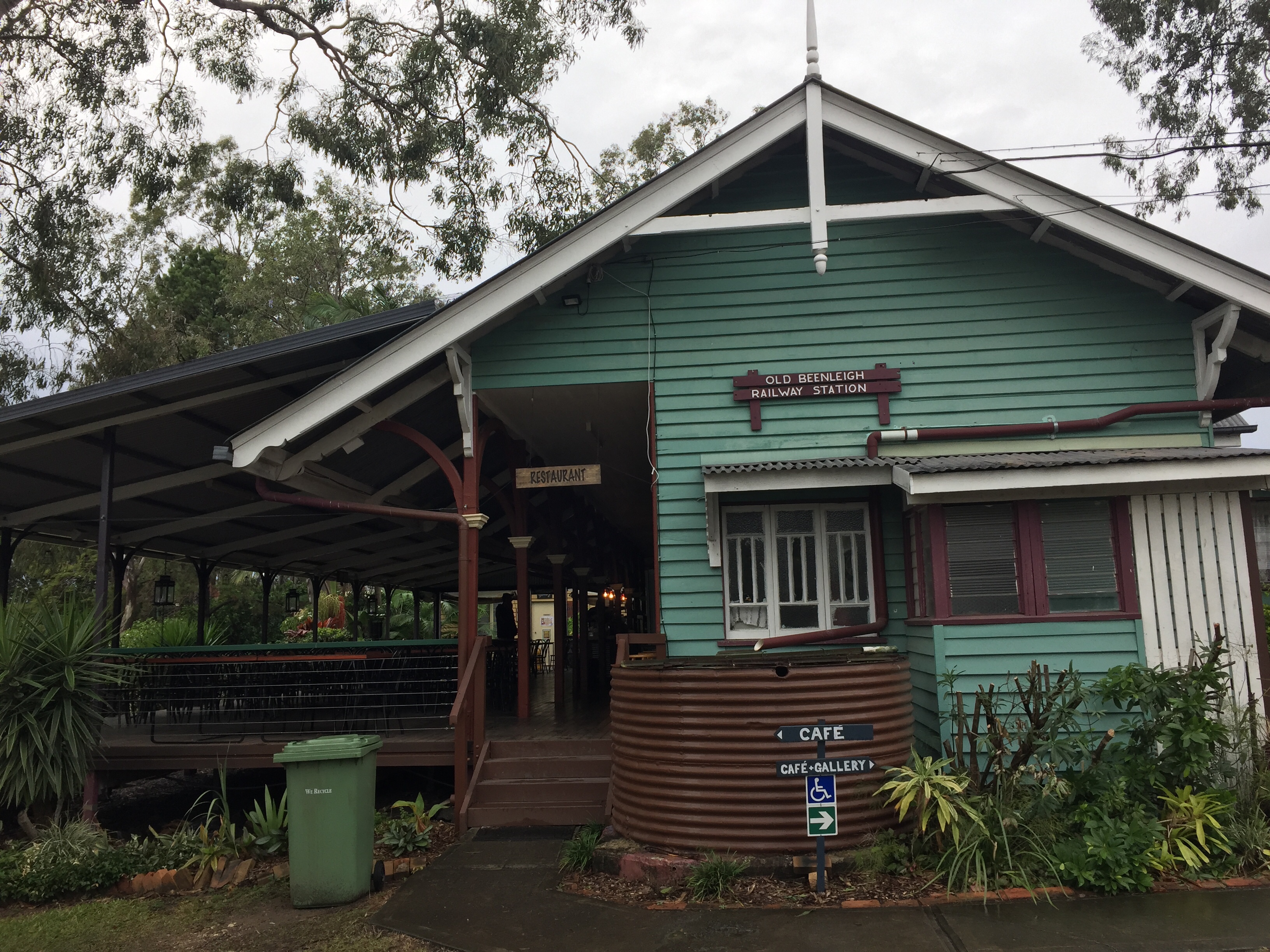
Today I joined my fellow members of the Redlands Genealogical Society on a tour of this village and it was definitely a walk down memory lane.
It is a heritage village and living history museum dedicated to preserving the cultural heritage of the Beenleigh region for current and future generations to enjoy. Beenleigh is situated between Brisbane and the Gold Coast & it took me about 45 minutes to drive there this morning. It brought back a lot of memories and was well worth the drive. We began our visit with damper and a cuppa which we had to have inside because of the rain.
There are quite a number of old buildings making up the village and they are well cared for by the amazing team of volunteers. The old Beenleigh railway station is so typical of those of its time and you can find them scattered throughout Queensland.
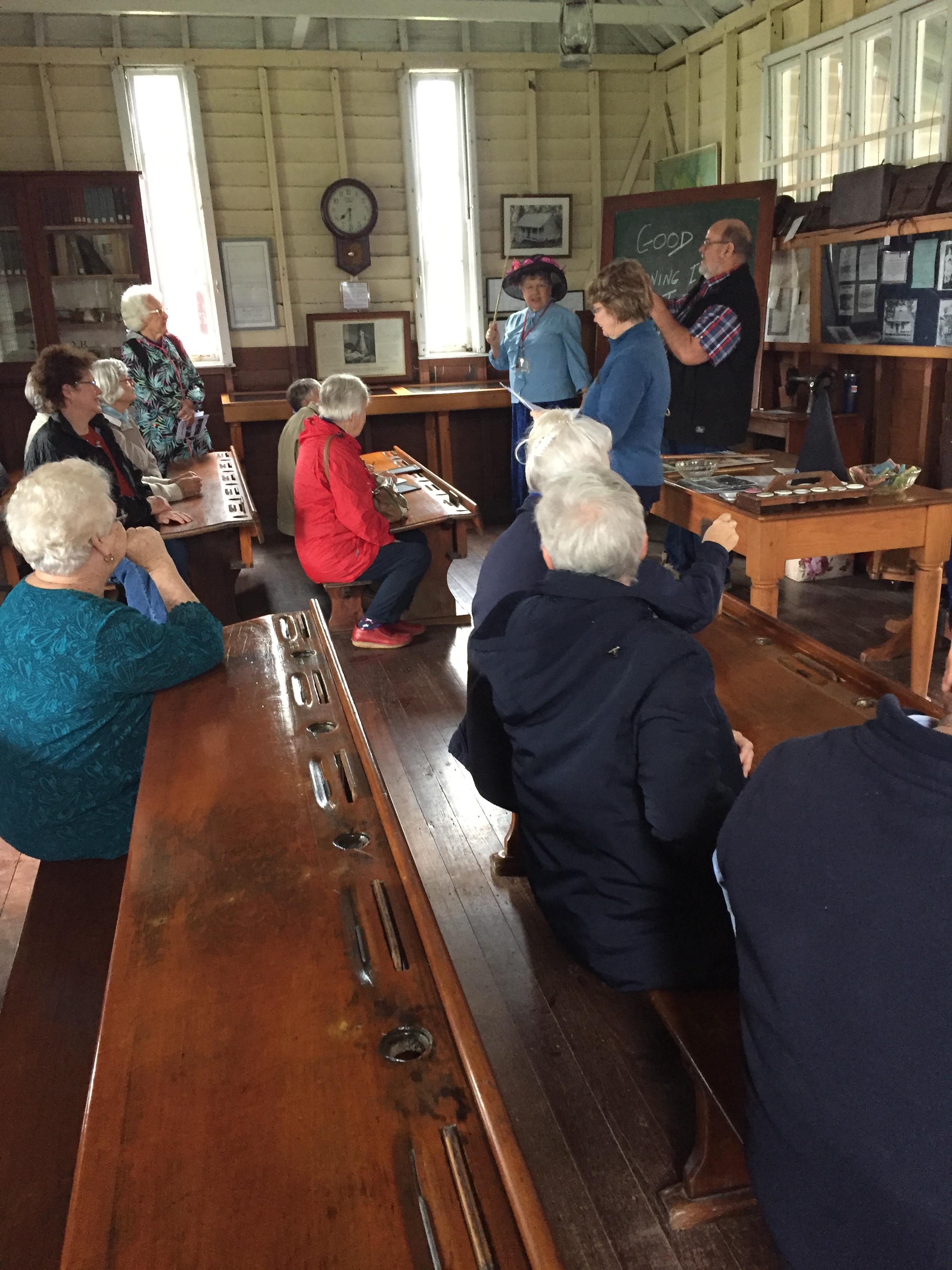
I especially loved the old one-teacher school. I didn’t attend this one which was moved here from Loganhome but I did attend similar ones in Hivesville and Jimboomba, both small country towns in South East Queensland and my daughters attended one in Branyan, near Bundaberg. Jimboomba is no longer a small country town but is quite a metropolis and The Branyan State School has grown into a much bigger school.
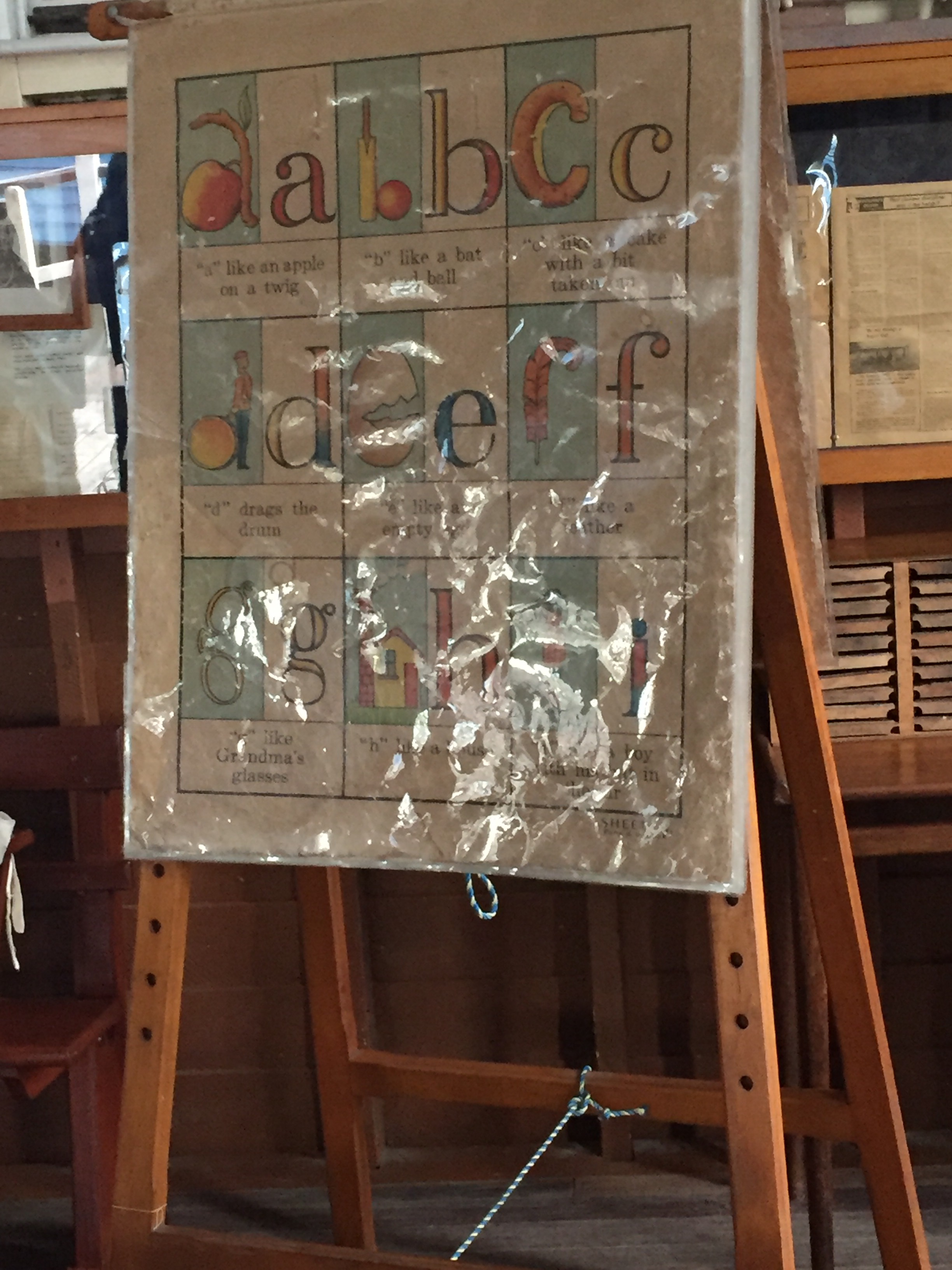
It was fun to slide into the old-style seating, pick up a slate pencil and write on the slate. I think we used slates until grade 3. We checked out the holes in the desks for the inkwells and reminisced about the cheeky boys dipping the girls’ plaits in the ink well. The Queenslanders amongst us could recite the words on the letter chart: b like a bat and ball and b says ‘b’.
I seemed to be the only one who could remember writing out the good manners chart, pictured above, for talking in class but we could all remember getting a smack over the knuckles with a ruler for talking.
This is a ‘Rural School Building’ which was moved from the Beenleigh Primary School. I went to Caboolture Primary School for grades 4 to 8 and we had a Rural School there too. Kids used to come in by bus from all the little schools around. In grade 6, we learnt ‘milk and cream testing’ which involved using pipettes and a centrifuge etc to measure the fat content of the milk and cream. I’m not sure if this was meant to prepare us to work in local dairies or just interest us in science. Looking back, it does seem a bit strange but I did enjoy it. In grades 7 and 8 we learnt cooking and sewing at Rural School and the boys did metalwork and woodwork. I think it was for one afternoon a week. I remember we had to write up our recipes very neatly and find a picture of what we were cooking and it was marked out of 10. I enjoyed the cooking but showed no skill at all with a needle.
This is a page out of one of my books – it’s a bit yellow with age but I still use some of the recipes occasionally. I would have been pleased with the mark of 8.5 out of 10.
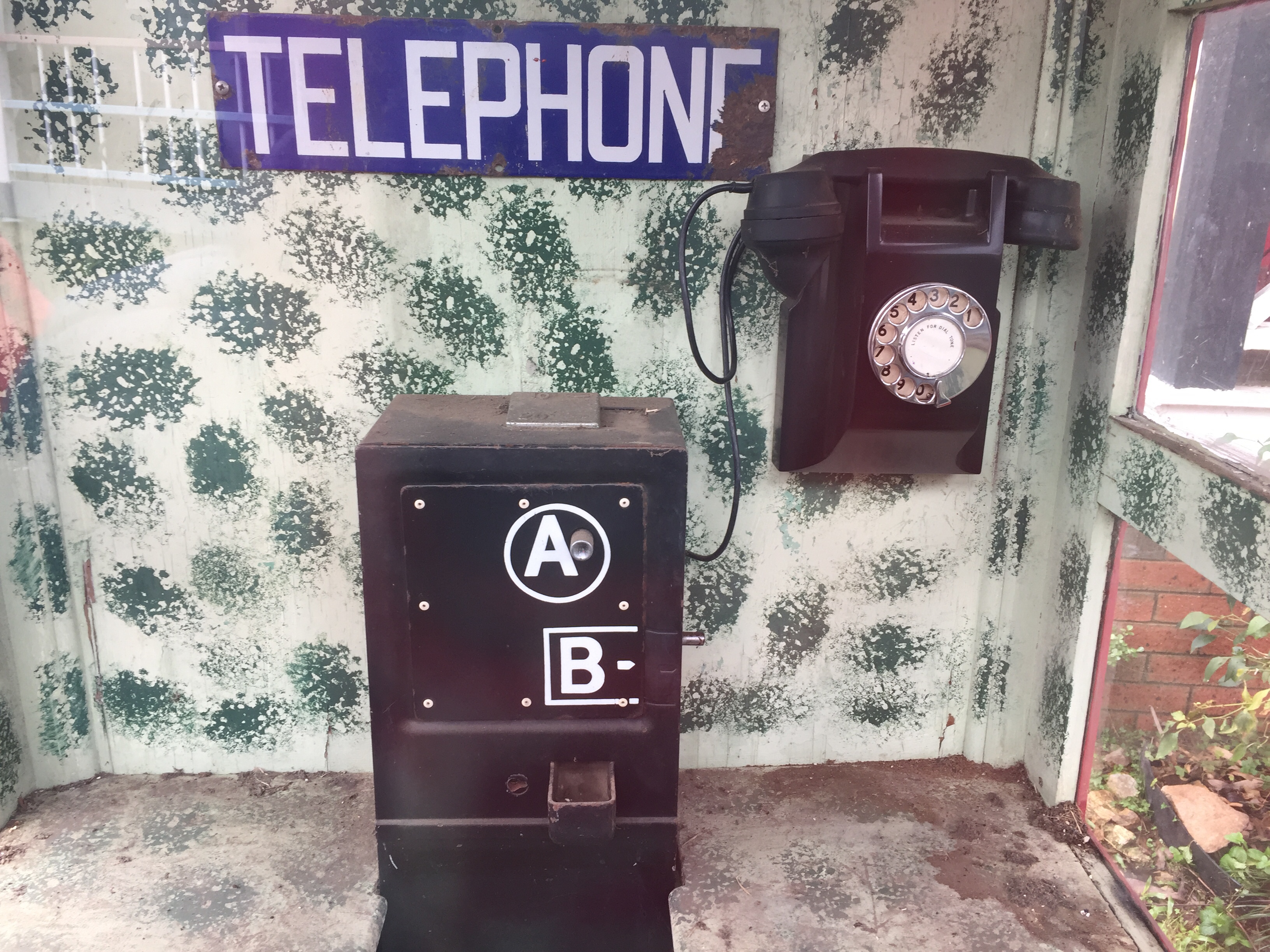
This morning there were plenty of ‘I remember doing……’ or ‘Remember that’ moments. We could all remember trying to make a phone call from a public phone box and hearing the operator telling us to press button A to be connected or press button B to get your money back and being frustrated when you ran out of coins. Mobiles make it all so much easier. There’s all sorts of memorabilia. It was fascinating.
So fascinating that I think I’ll take my grandkids there next week in the school holidays. They will enjoy lunch in the Tin Cup Cafe too as we did before coming home.
This is a story about another of our relatives whose WWI story we followed when we were in France last month – Robert WACHMAN, David’s second cousin once removed.
Robert was born in Dublin Ireland in 1894 to Moshe WACHMAN and Seina (Sina Tzia bat Rachel Leah) JACKSON. This gets a bit complicated but Seina’s mother was Rachel Leah Wachman who married Urel Jackson. Rachel is the sister of David’s great grandmother Tsipe Wachman. If you’ve been following my blogs for a while, you’ll remember that this was the massive brick wall I had in trying to discover the link between Moshe and Tsipe. Well, we think there is a double link in that Seina is Moshe’s cousin. Anyway, as I said, that’s complicated. Enough to know that David and Robert WACHMAN are definitely cousins.
Moshe was born in Tels Lithuania in 1865 and Seina in 1871 in Memel (now Klapedia) Lithuanis. Somehow they both arrived in Dublin where they married in 1885 and started their family. Robert had two older brothers also born in Dublin – Abraham (1891) and Simon(1892). The family then migrated to Capetown South Africa where they had four more children – Edward (1899), Harry (1901), Albert (1903) and Saidie (1904).
They then migrated to Australia arriving in Albany Western Australia in May 1905. Ernest was born in Broken Hill on 7 May 1907 and Betty was born in Australia somewhere in 1909.
So, now to Robert, himself. in 1914 at the outbreak of war, he was a traveller, according to his army record. We presume that means what we used to call a “commercial traveller” and we get a further clue from an item in the Melbourne Herald on 28 May 1914 stating that he and his brother, Simon, applied for a patent (No 12757) for a “push coin vending machine”. I am unable to find further information on the success of this patent and I wonder if anything came of it.
He enlisted in the AIF at Blackboy Hill, east of Perth, on 25 November 1915 when he was 21 years 8 months old and living at 258 Newcastle Street Perth Western Australia. On 10 February 1916 he is shown as being a member of the 16th Battalion 15th Reinforcements. Blackboy Hill seems an interesting place. It was the birthplace of the Australian Infantry Force (AIF) in Western Australia and over 32 000 men did their basic training there for about 10 weeks before heading for Egypt or England. Because of the number of casualties on the battlefields, some battalions had up to 27 reinforcements of 100 men in training here, ready to head overseas. Robert was 5ft 7ins (170cm) tall and weighed 158lbs (72kg). He had black hair, brown eyes and a dark complexion and was of the Jewish faith and he noted that he was a British subject. I think this is because his father was naturalised in South Africa when he was still a minor. His next of kin was his mother, Seina who was living at 137 Lake St, Perth.
On 12 February in Freemantle he embarked on the HMAT A28 Miltiades and he shows on the Australian War Memorial Embarkation roll number as 23/35/3. He joined the 14th Battalion 16th reinforcements on 13 February 1916 and he disembarked at Port Suez on 11 March 16. On 14 May 1916 he was allotted to the 12th Training Battalion at Tel-el-Kabir and it was here that he was awarded 28 days punishment on 28 May for refusing duty and insolence to a Non-Commissioned Officer.
He was transferred to the 48th Battalion, part of the 12th Brigade 4th Division, on 2 June 1916, the day that he embarked on HMT Caledonia at Alexandria. He arrived in France at Marseille on 9 June and they went to the Nursery Sector, to an area around Bailleul, a French Flemish town close to the border with Belgium. The Nursery Sector was so named because it was supposed to be relatively quiet and an area where units new to the Western Front could be sent to get ready for trench warfare. Whilst here they visited the front line trenches at Houplines. In July they were under heavy shelling form the Germans in the Fleurbaix area and were moved by train from Bailleux to Doullens, about 100km south in the Somme.
In July 1916 there was intense fighting around Pozières in an attempt to capture Old German Lines (OGL) 1 & 2. By August 6 and after 10 days of fighting, the Australian 2nd Division had lost 6848 officers and men and it was replaced by the Australian 4th Division which included the 48th Battalion and Robert Wachman. On 8 August, they captured OG1 & OG2 but suffered heavy casualties with 102 killed, 404 wounded and 76 missing in action (MIA). Many were shell shocked and the battalion numbers were very low. They were moved to Albert on 16 August and marched to Warloy Baillon and then back to Albert but by the end of the month they were back near Pozières attacking Mouquet Farm.
On 2 September they were moved back to Albert and from there travelled to Belgium where they had huts and tents, were able to wash and change their socks. What a relief that must have been! They had a church parade – I wonder if there was a Rabbi amongst the chaplains? In October they were at Vierstraat in Belgium at the front but were not in the action. They were billeted in Boeschepe and then moved to Villers sous Ailly where they were also billeted. They were cleaning up the streets and here they were able to attend a concert which was held in a barn.
November saw them moved from Villers sous Ailly to Berthencourt where they were billeted and underwent training and then moved to Vaux which was a good area where they underwent training and even played football. They were then moved to Dernancourt where the billets were poor and extremely dirty. They were cold and wet. Then they moved to Fricourt and then to Switch Trench at Flers which was a very bad area where they dug trenches in the mud and water. They saw action at Flers and here conditions were so bad it was not possible to give the men a hot meal whilst in the firing line. Rain was torrential and the mud was up to the men’s knees. This was the start of the worst European winter for 40 years. To move from rear camps up to the front line with full pack on, the men could take 6 hours to cover the 3 kms so bad was the weather and the mud. Sleep was impossible in the trenches and men could have to remain standing for the full 24 hours as they couldn’t lie in the mud.
The 48th then moved back to Mametz in the mud over bad roads. In December they were in Dernancourt where they were visited by General Birdwood, the British Officer who was in command of the Australian and New Zealand Forces at Gallipoli and on the Western Front. The Battalion was moved to Flesselles and then to Vigancourt and in both places were billeted.
On New Years Day 1917, the Brigade held a sports day and the 48th was the successful battalion winning most events. On 2 January, they marched to Franvillers, a distance of 14 miles in full kit in 6.5 hours. The official war diary states that the men marched well – no one fell out. On 3 January, they marched from Franvillers to Dernancourt in 3.5 hours and again, no man fell out. On the 5th they marched for three hours to Fricourt along roads that were very difficult to march on and again no one fell out. Here they were joined by the 25th reinforcements. On this day, Robert Wachman is promoted to Corporal (Temporary). On the 6th, they marched to Bazentin, back near Flers, and took up lines near Gueudecourt. They moved forward then to support the lines at Bulls Road.
The war diary for the 8th is very interesting to read. All cooking was done in Flers and carrying parties carried the two meals per day to the men in the trenches. This took 3 hours each way each meal. The men were also given hot soup at 3am. Their wet socks were sent back daily and dry ones provided. On the 9th, an easier route was found for the carrying parties and the return trip took only 2.5 hrs. There was heavy artillery fire from the German lines.
On the 10th, it appears that there was debate about how the meals should be delivered efficiently but there is conviction that without hot food helping to keep the men warm and fed, they would not be efficient. Army rations would not be enough. On the 12th enemy artillery fire is heavy and three men are killed – one is buried for 7 hours under debris. Some men are suffering from trench feet with the extreme cold even with the dry socks.
By January 12, the problem with trench feet had become worse with two men evacuated. The other sufferers go to the Battalion Rest Station where the Medical Officer is pleased with the results of a new powder they have been issued with. The porters carrying supplies leave at 5pm and finish their second trip about 5am as it all has to happen under the cover of darkness. Three men are evacuated with mumps. The 15th saw heavy shelling and headquarters was hit and a store containing gum boots was blown up. After 10 days at the front, the 48th was relieved by the 47th at 7:45pm. The men moved to Brisbane Camp and there was a heavy fall of snow.
On January 19, fatigues arrived and all men had a bath and a clean set of clothes. All rifles were cleaned and inspected. I can’t begin to imagine how good that must have felt. I imagine it took a lot of soaking and scrubbing to remove the mud from their poor tired bodies.
On 24th they moved into Bazentin Camp where it was still very cold and the snow was still on the ground. The men worked on the roads and the rail tracks. The diary of the 31st states that the Australians are not used to the extreme cold and they need sufficient fuel to allow them to have a stove to keep them warm and get them ready for their next tour of duty. The lack of sufficient food and heating is not good.
In February, the 48th continued with the railway work and moved to the Albury Camp, to the Flers Sector and then to Bulls Trench and back to Mametz.
During March the weather was still extremely cold and the men were busy cleaning arms and equipment and training. They were wet and cold. On March 17, Robert Wachman was promoted to Corporal.
On 1 April, they marched 6 miles into to an area near Bapaume with full pack and one blanket. It was wet and cold. The men then worked on fatigues. The officers undertook some training on the 5th and then inspected the frontlines at Bullecourt and Noreuil on the 6th. They arranged to relieve the 52nd and did so on the 8th. The next day was quiet and some patrols went out into enemy wire at Bullecourt and discovered that the barbed wire was strong. Bullecourt was part of the German’s defence lines known as the Hindenburg Line and the Allies wanted to break through thi s line
On April 10, the 46th and 48th Battalion were ordered to attack enemy lines on a frontage of 600 yards. The battalions were to be in position to attack in conjunction with the tanks at 4:30am. There was to be no artillery fire so as to surprise the Germans. But the tanks failed to appear and orders to retire were given at 5:30. This had to happen in daylight in full view of the enemy. There was a barrage of enemy fire and five men were killed and 17 wounded.
The attack on Bullecourt did take place on April 11. It was timed to occur at 4:20 but the tanks were late and slow at moving forward so the 48th couldn’t attack until 6:19. This meant that the men were exposed to heavy rifle and machine gun fire and the battalion suffered heavy losses – 14 Officers and 421 men. They breached the enemy position and held it for 70 minutes despite the withdrawal of the other battalions on their flanks. They retired in an orderly manner but were unable to collect the wounded and the dead. A very sad day for Australia.
Sadly, Corporal Robert Wachman was one left behind. He was reported Missing in Action (MIA) on 11 April 1917. He was one of the 3000 casualties of that battle. Another 1170 men were taken prisoner.
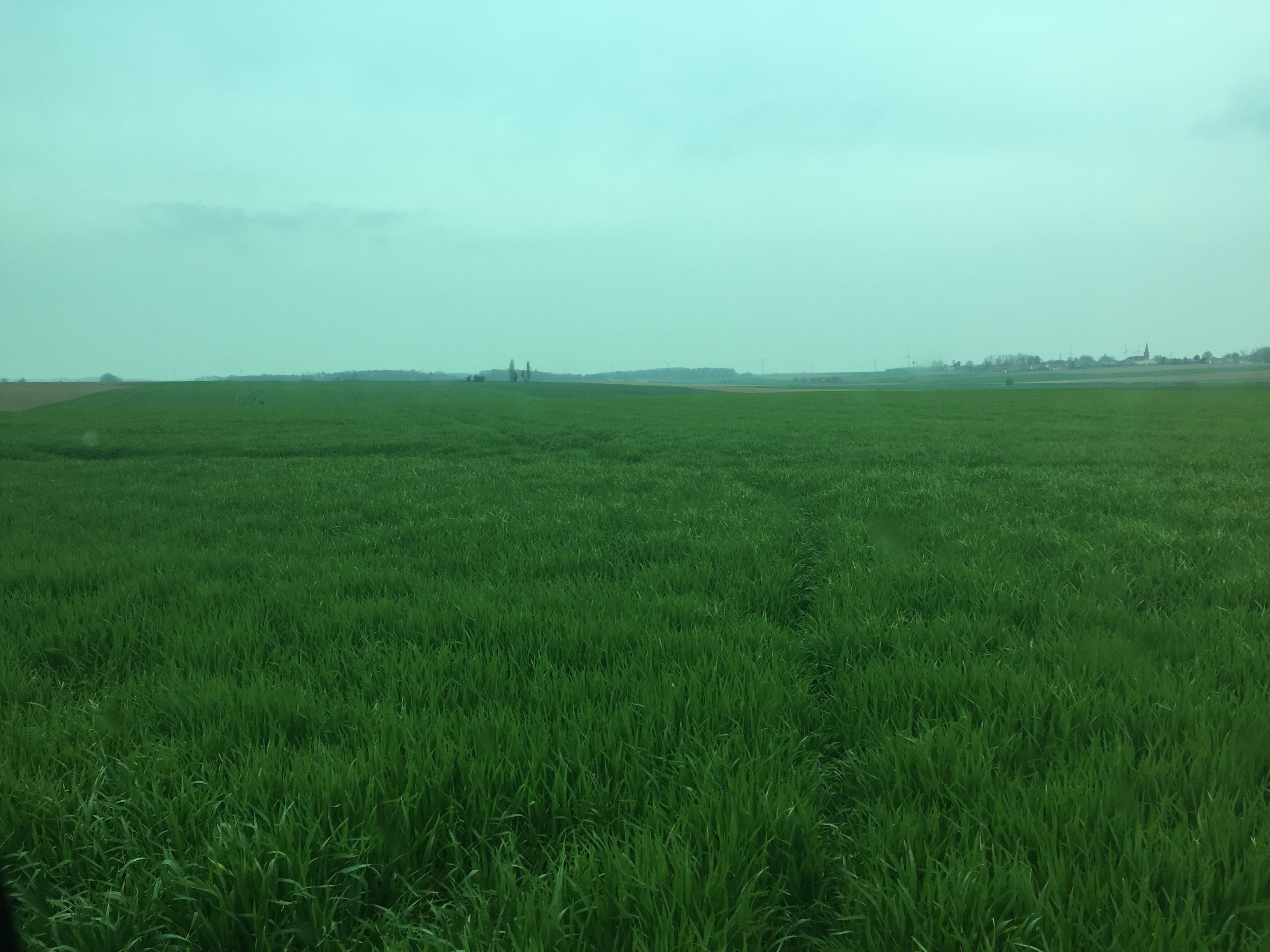
The field at Bullecourt where it is thought that Robert’s body lies.
His brother Simon who was in the Transport Section of the 44th Battalion was making enquiries in July 1917 to try to find out what happened to his brother.
His mother, Seina, was his next of kin and on 23 January 1918 she wrote to the army requesting information on Robert’s whereabouts as she had been informed that he was MIA. She received an answer on 30 January saying that there was no further information.
It wasn’t until the 8 March 1918 that Simon received notification that Robert had been killed on 11 April. The Australian Red Cross Wounded and Missing Enquiry Bureau Files contain a statement by Second Lieutenant Brockelberg that Corporal Wachman was badly hit and subsequently died at Bullecourt on 11 April 1917. It’s awful to think of those men lying wounded in that dreadful field and being left behind as their mates retreated.
His effects were returned to his mother on 21 February 1918. All she received were some letters and a book of views (postcards maybe?). She received a pension of 30 shillings per fortnight.
A memorial to the Bullecourt DiggerA digger wearing full pack at the Bullecourt Memorial
He was entitled to two medals: the British War Medal and the Victory Medal and although Seina was his next of kin, his medals were sent to his father, Moshe, on 23 January 1923 as that was the law at that time.
Robert’s name on the Australian War Memorial at Villers Bretonneux. Myriam of Walkabout Digger Tours and David Edelman are pointing to his name during our visit in April 2019.
Visiting the battlefields and war cemeteries of the Somme and learning the stories of those brave men who suffered so much in the mud and the cold under enemy fire is heartbreaking. The noise must have been deafening, the smell horrible, their homesickness overwhelming, the mud suffocating, the cold and wet intolerable….. How did they do it?
I wonder what Robert would have achieved if he had made it home? Would his patent for a push coin vending machine have been developed? What else would he have patented?
If you think about all the young men and women killed in wars and you ponder what they collectively could have achieved, it really is mind-blowing. What a waste!
Charles Brooke BURGESS was born in Werribee Victoria Australia around August 1893. His parents were Brooke BURGESS and Elizabeth HEATH and Brooke was the brother of my great grandfather, Joseph BURGESS. So Charles was my first cousin twice removed.
In 1914 Charles was working as a signwriter at Buckle Bros in Melbourne, having served a three-year apprenticeship. When war broke out in August 1914, the Naval and Expeditionary Forces were formed to assist the country in seizing or neutralising German territories in the Pacific and Charles joined this volunteer group on 14 August .
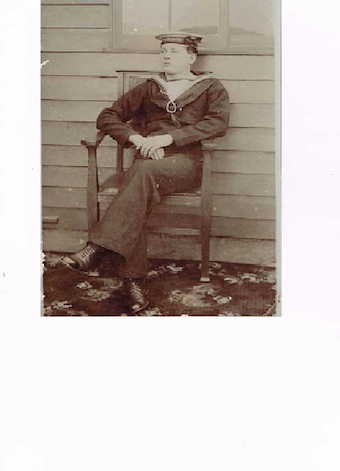
Charles in his naval uniform
On 1 July 1915 he enlisted in the Australian Infantry Forces 30th Battalion. At that time he was 5ft 5in tall (166cm) tall and weighed 10st 5lbs (54kg) so he was quite a small man. He had a fair complexion, fair hair, blue eyes and tattoos on both arms. His regimental number was 1047. He listed his religion as church of England. The 30th Battalion was formed in Liverpool NSW and was made up almost entirely of men from Newcastle and country NSW but one whole unit was almost entirely made up of former RAN ratings from Victoria.
On 9 November 2015 Charles was on the HMAT Beltana leaving Sydney and heading for Suez where he disembarked on 11 December 1915. On 18 March he was promoted to Lance Corporal. Whilst in Egypt the Battalion underwent training – it seems there was insufficient accommodation for them in France at this time. He left Alexandria on the HMAT Honorata on 16 June and disembarked in Marseille France on 23 June, having been promoted to Corporal on the 18.
A few weeks ago we were lucky enough to be able to tour the Somme with Myriam of Walkabout Digger Tours and she took us to all the relevant places and told us the story of his war. I’d like to share it with you.
The battalion was moved to the front and its first major battle took place at Fromelles on 19 July 1916. Initially, they were involved in providing carrying parties for supplies and ammunition but were soon involved in the heavy fighting. This was the worst 24 hours in Australia’s military history with 5533 casualties on one night. Brigadier General, H.E. “Pompey” Elliot stated that it was a “tactical abortion”. The 30th lost 54 men, Killed in Action (KIA), 224 wounded and 68 missing in action. What must have that been like for Charles and all the others? I can’t imagine!
During the rest of 1916 the battalion was rotated in and out of the front but took no part in any major action. Charles suffered from trench feet which must have been horrible. He was hospitalised and on 7 December 1916 he was on the hospital ship Newhaven at Calais being transferred to the 3rd London General Hospital. He stayed there until 30 March when he was transferred to the 3rd Auxiliary Hospital. Trench foot is a medical condition caused by long exposure of the feet to damp, cold and unsanitary conditions. It wasn’t until 4 May that he was released from hospital and given a furlough. On 21 May he was required to report to Perham Downs which was a command depot for men who had been wounded or were ill and had been discharged from hospital. He remained in England and on 17 January 1918 he marched into the overseas training brigade of the 30th Battalion at Longbridge Deverill in Wiltshire.
He left Longbridge on 7 February for Southampton and then onto Le Havre in the Normandy region of France and then to rejoin the 30th Battalion on 15 February. During this month the battalion was mainly engaged in improving the trenches in the area near Messines in West Flanders in Belgium.
In March, they were involved in raiding parties & training at Wulvergham Camp and were moved to Neuve Eglise then to Hazebrouck and then to Douleens by train and then by bus to Bus les Artois, Authie and Vauchelle in Northern France.
At the beginning of April 1918 the battalion was in Vauchelle and were training. They then moved to Bois de Gentelles (Genteel Wood) via Daours on 5 April where they were reinforcing the lines at Bois de Gentelles.
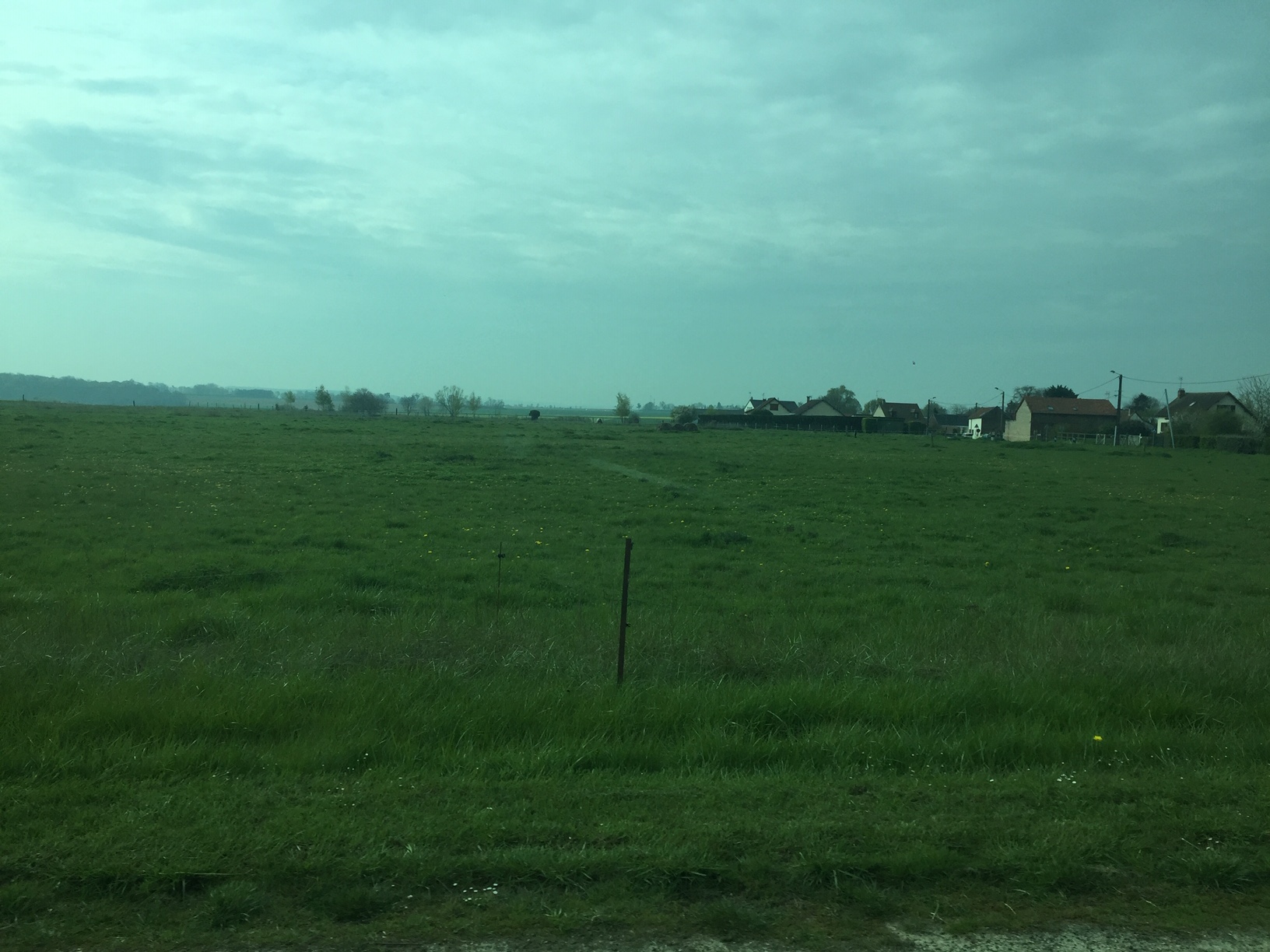
Bois de Gentelles in the distance where Charles was killed
On 7 April, Charles was behind the lines having a shave and a man called Medhurst was having a wash when an enemy plane flew overhead and dropped a bomb which killed them both and another man.
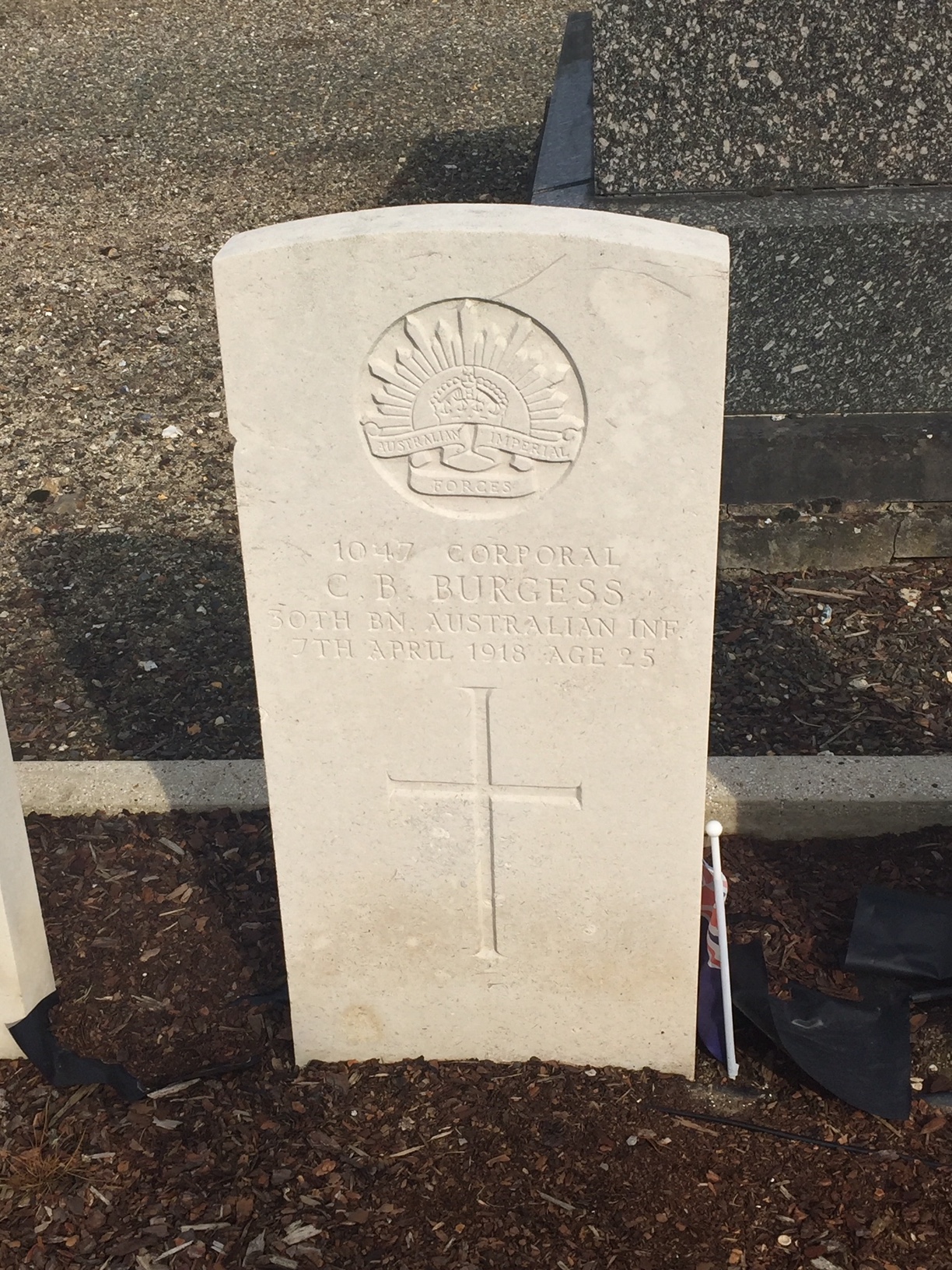
On the afternoon of the 7th they was buried in the local community cemetery at Boves by the Church of England Chaplain. Padre Hicks.
Charles’ headstone in the cemetery at Boves
The Australian Red Cross Society Wounded and Missing Enquiry bureau Files, 1914-18 War for 1047 Corporal Charles Brooke Burgess contain these eye witness accounts of his death.:
Burgess and Medhurst were out on a pack guard some time in April, they were killed outright by a bomb from an aeroplane sometime in April. There was every opportunity for burial. It happened in a wood between Blancy-Trombelle and Boves (near Villers-Bretonneux). Cpl Burgess shaving at the time and Medhurst was having a wash. (Informant was Dvr. H.L.Kay 2372, 30th AIF Transport, University Hospital, Southampton on 18 July 1918.)
Burgess and Methurst were together in the transport lines at Gentile Wood between Villers-Bretonneux and Boves when I saw them killed by an aerial torpedo about 11am on April 7th. They were buried that afternoon in two graves side by side. The service was taken by the Padre of the Battalion. A small cross was put over each grave but as far as I know not a battalion cross. I was quite close at the time and attended the funeral. Description: Corporal A Coy 1 Platoon. Came from Melbourne and been in Naval Reserve out there. Always called “Charlie”. (Informant was Pte Charles Edward Ellis, 2nd Platoon A Coy 30 AIF, Tapsbury St Albans. July 22nd 1918.)
In his will, Charles left his worldly goods to his mother. His effects were sent home to her,
Details of his effects from his war service record.
Wouldn’t I love to see those diaries! I wonder if Elizabeth kept them. Could they still exist in someone’s collection? I have so many questions. Who were the photos of? Did he have a girlfriend somewhere? Did he meet someone in the 14 months he was in England being treated for his trench feet and recuperating? I wonder did he use his signwriting skills to do directional signs for troop movements in France?
Searching on Trove, I found the following entries in the family notices of the Argus under the heading: DIED ON SERVICE
BURGESS.- Killed in action April 7, 1918, Corpl. Charles Brooke, dearly beloved eldest son of Brooke and Elizabeth Burgess, and brother of Clara, Mary, Harry, Jack, Jim, Maggie, and Annie, aged 24 years, after 3 years and 7 months active service. (Inserted by his loving father, mother, brothers, and sisters, 164 Melbourne road,North Williamstown.)
BURGESS.– In memory of our dearly loved nephew and cousin, Corporal Charles Burgess, killed in action, April 7, 1918.There is a link death cannot sever;Love and remembrance live forever.–(Inserted by Mr. and Mrs. J. Burgess, Tib, and May.)
BURGESS.- In loving remembrance of Cpl. Charles Brook Burgess, killed in action 7th April, 1918.”Underneath are the everlasting arms.”–(Inserted by George S., Lydia, and Amy S. Wilkinson, 36 Alma terrace, Newport.)
Thus, he was mourned by his family who received the following medals on his behalf after the war: 1914/1915 Star, British War Medal and the Victory Star.
A poor substitution for a loved son, brother and cousin!
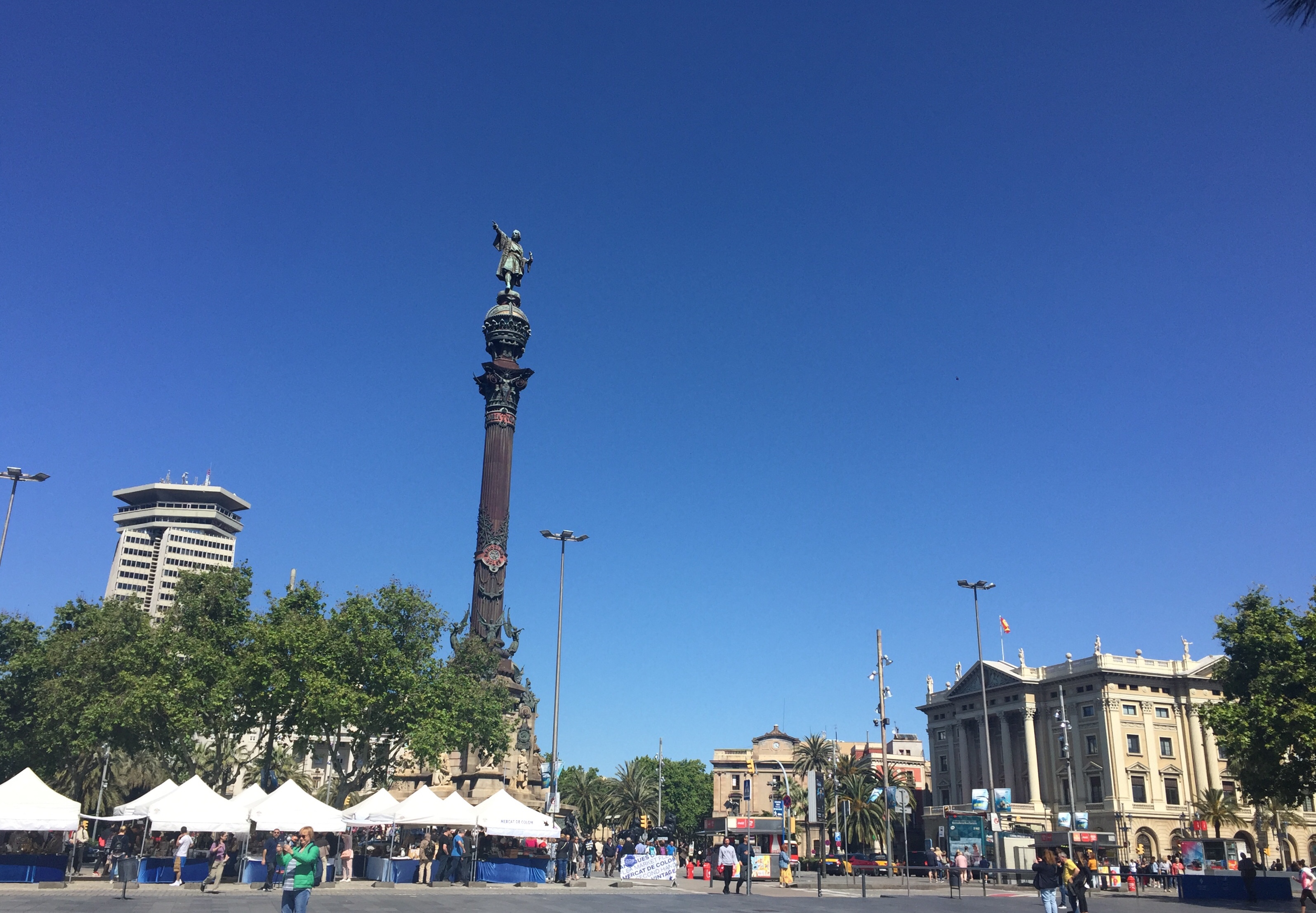
And so today we wandered La Ramblas with all the other tourists!
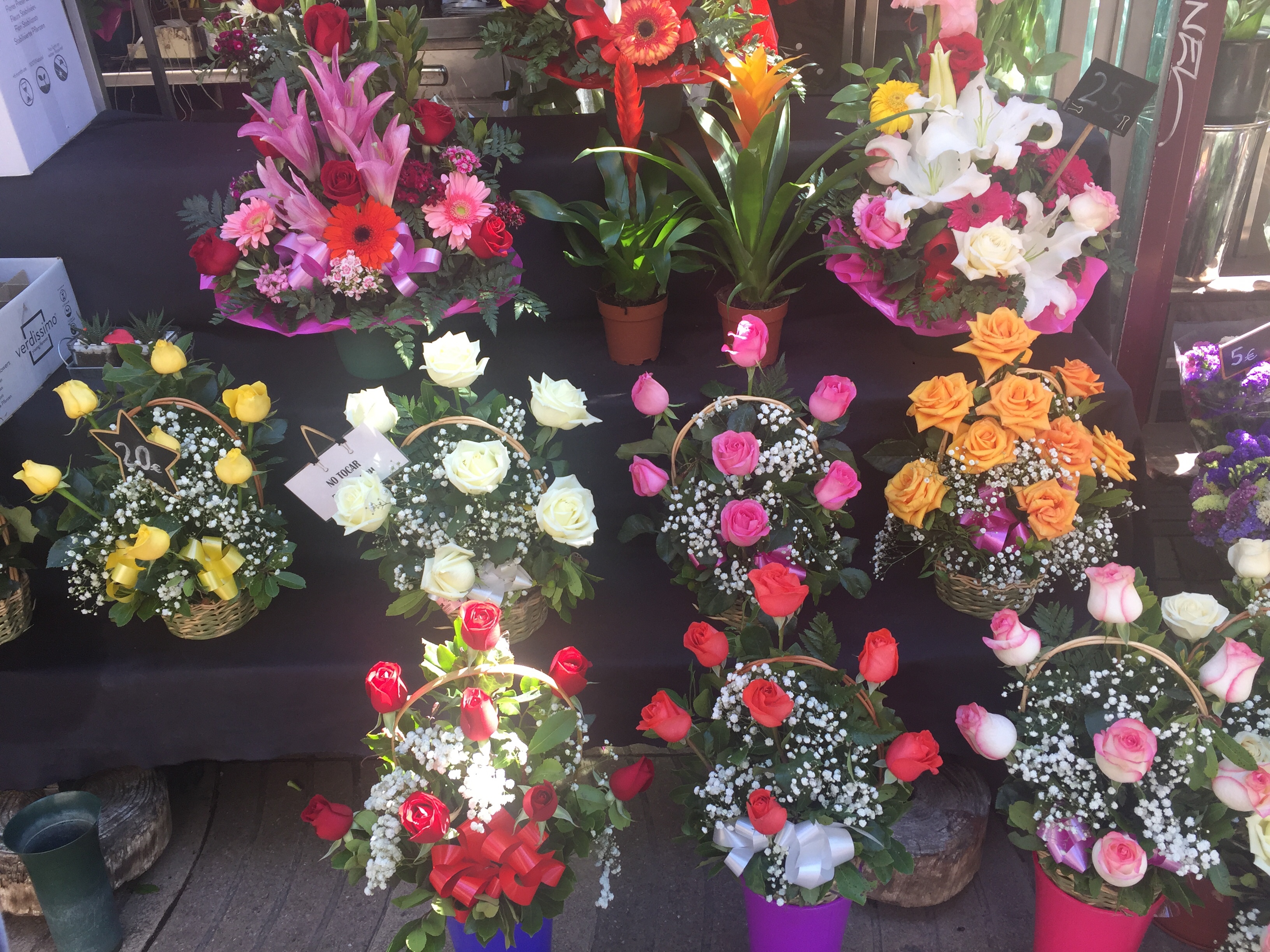
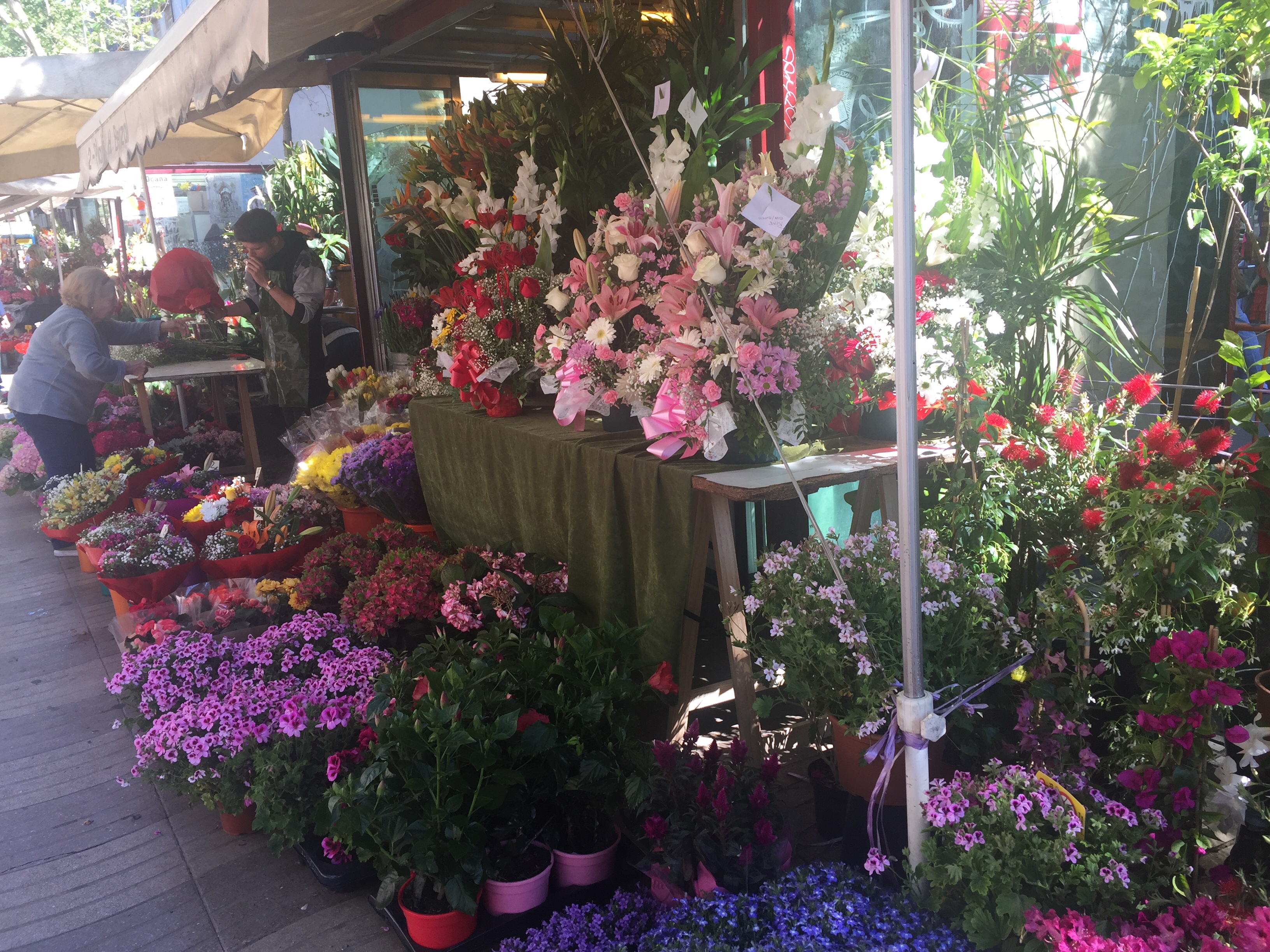
I loved the flowers – roses, orchids etc and herbs as well. We were surprised to see a couple of Australian native plants. Can you spot them?
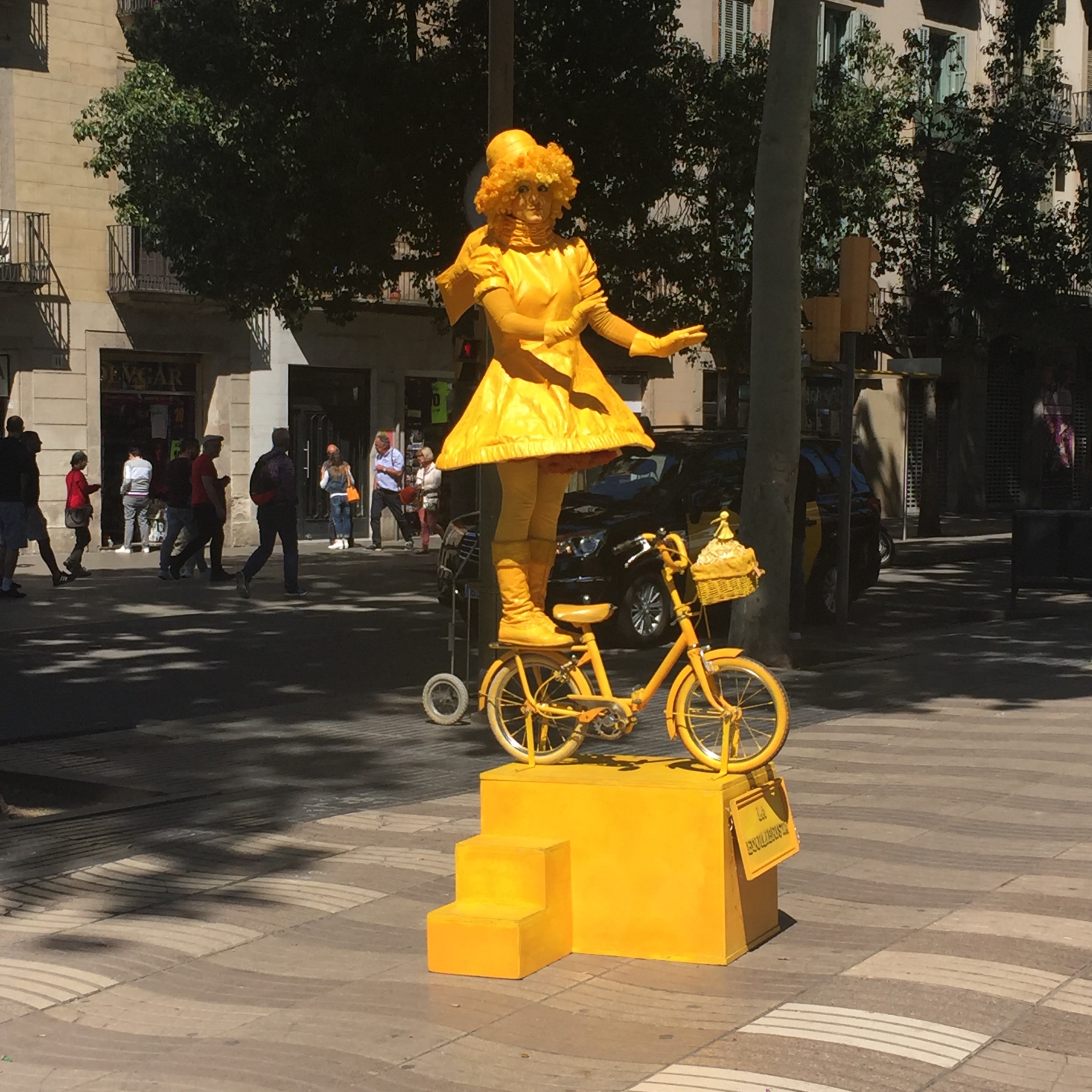
Many people wander the streets trying to sell items to tourists but they don’t appear to have much success. You see a variety of people dressed as characters and posing for photos with the crowd, hoping for donations and these seem to be more successful. Standing still all day in the costume and war paint must be difficult.
There were two demonstrations in the street. One around the statue of Columbus appeared to be part of the feminist movement and the other was something to do with Russia. Not being able to read Spanish particularly well, we weren’t really sure.
Here we are doing the ultimate tourist activity – lunching in La Ramblas with a huge glass of sangria and watching the passing parade.
Our last full day in Europe! We’ve had a wonderful time and we feel very lucky to have been here. Will we return? If so, when will that be? Who knows? But we have loved being here.
We are still in Bilbao’s port, Getxo and this morning I went for a beautiful walk along the waterfront. David wasn’t feeling energetic so he spent the morning reading.
It is quite cool and there’s a very strong wind blowing but thankfully it is sunny. My new bubble coat has come in very handy these last couple of days.
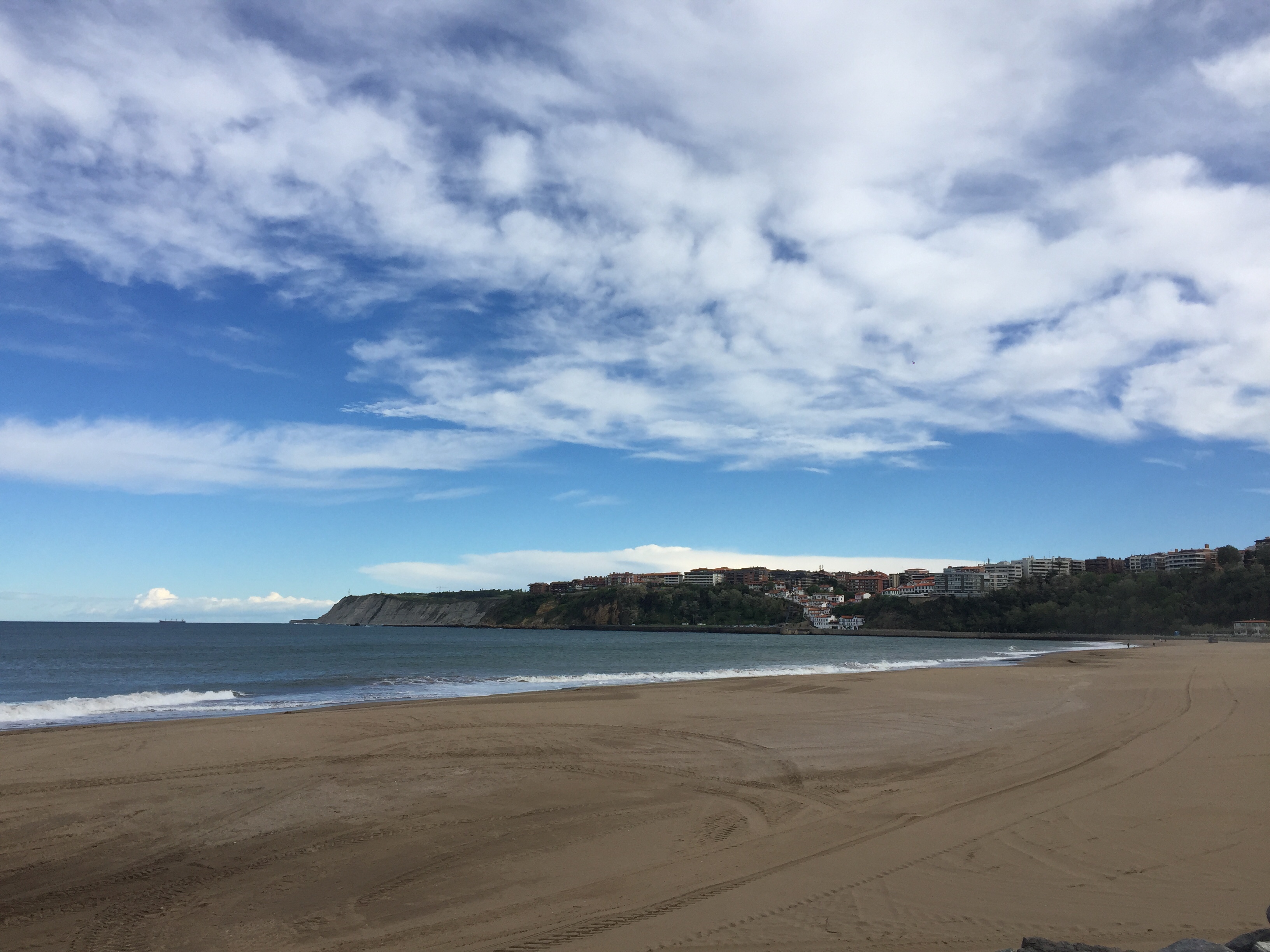
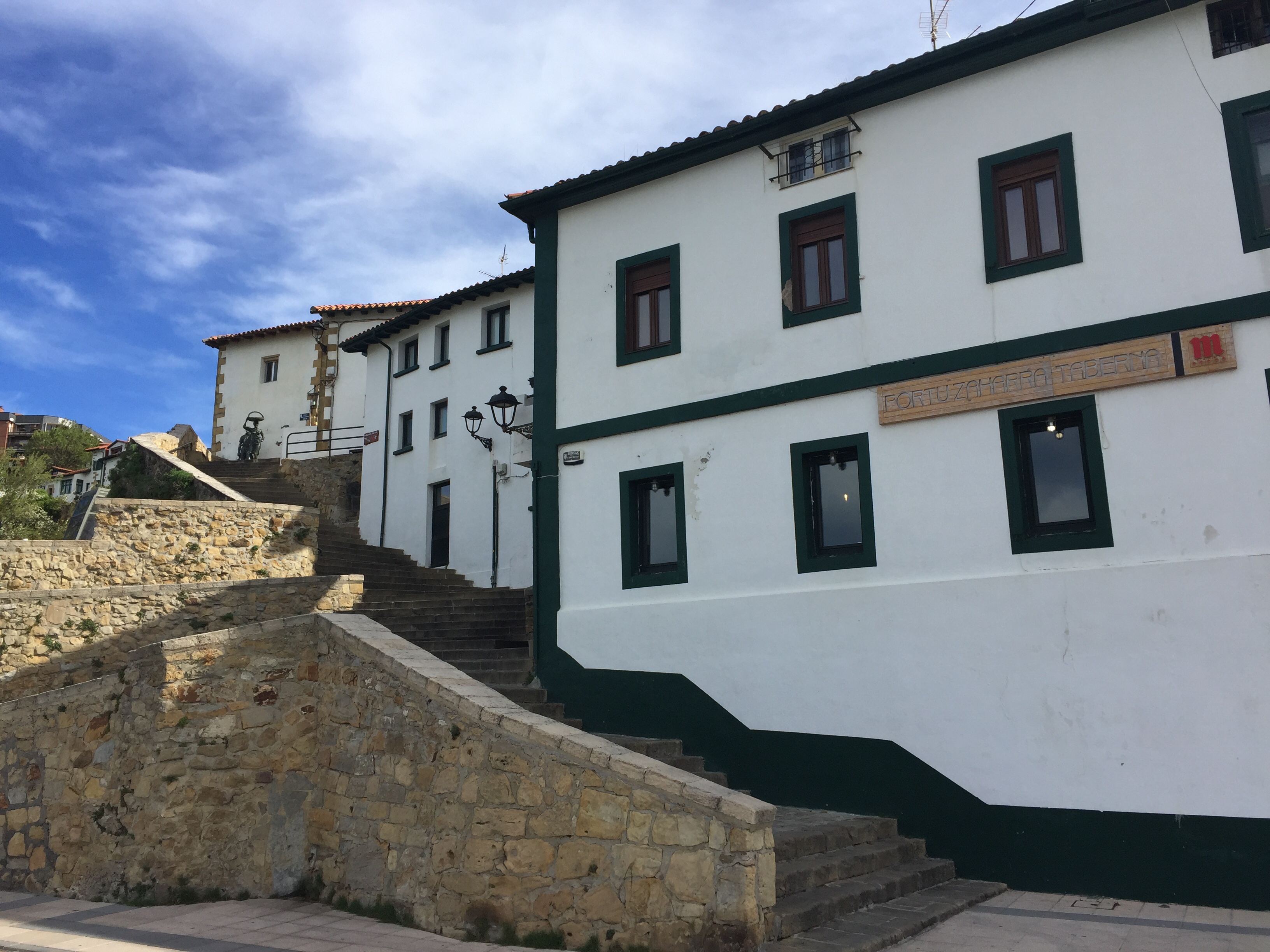
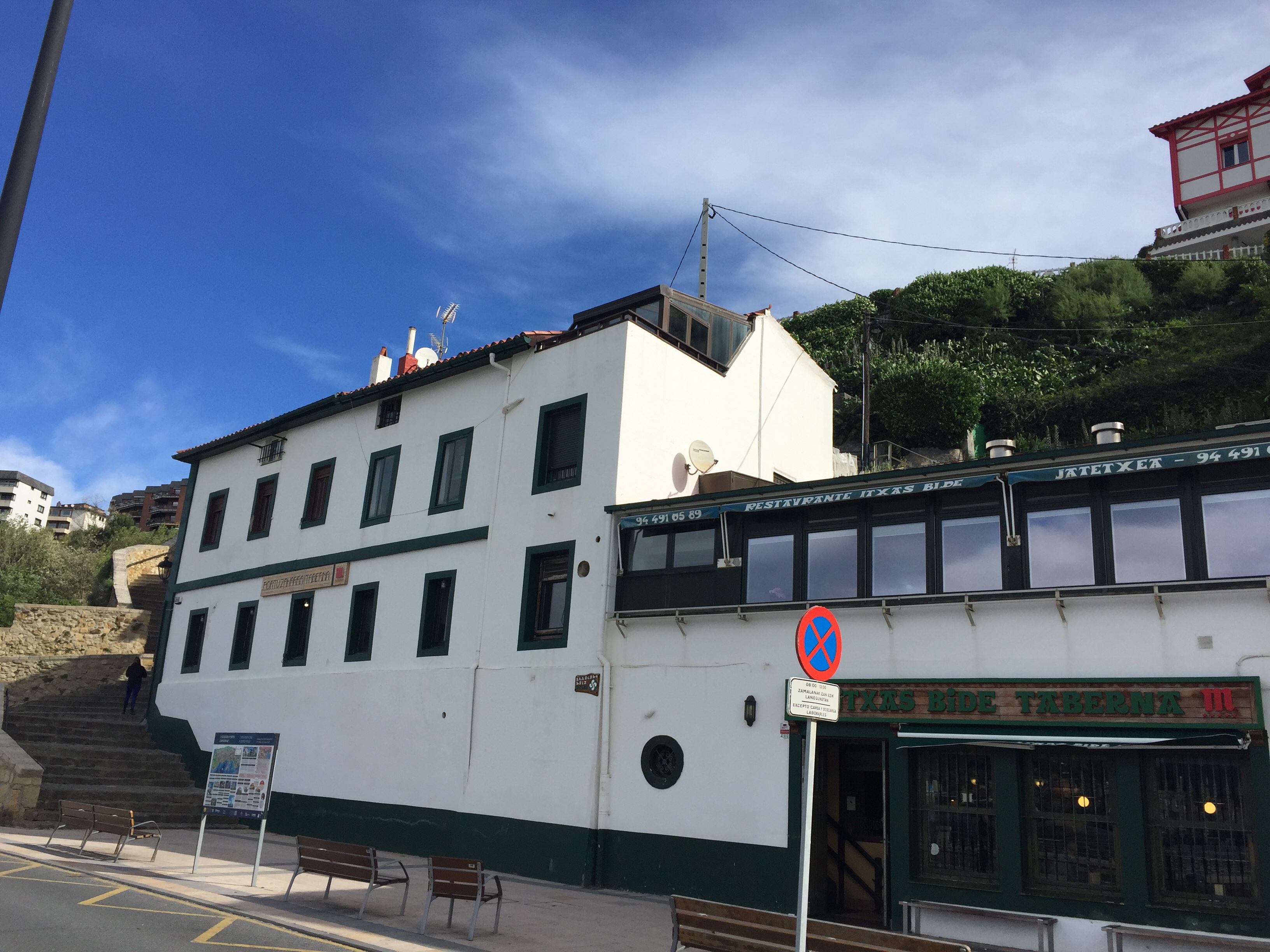
The tourist information lady said there’s a lovely old fishing village to walk around and I thought I’d do that. When you see the steps up to it, you’ll see why I just walked along the promenade below. Life wouldn’t have been easy for the fishermen here, as it wasn’t for my ancestors in Port Isaac.
Hills surround Getxo on three sides and they are covered with lush green vegetation. The beach is wide and sandy but I didn’t venture onto it as the wind was blowing up a lot of sand.
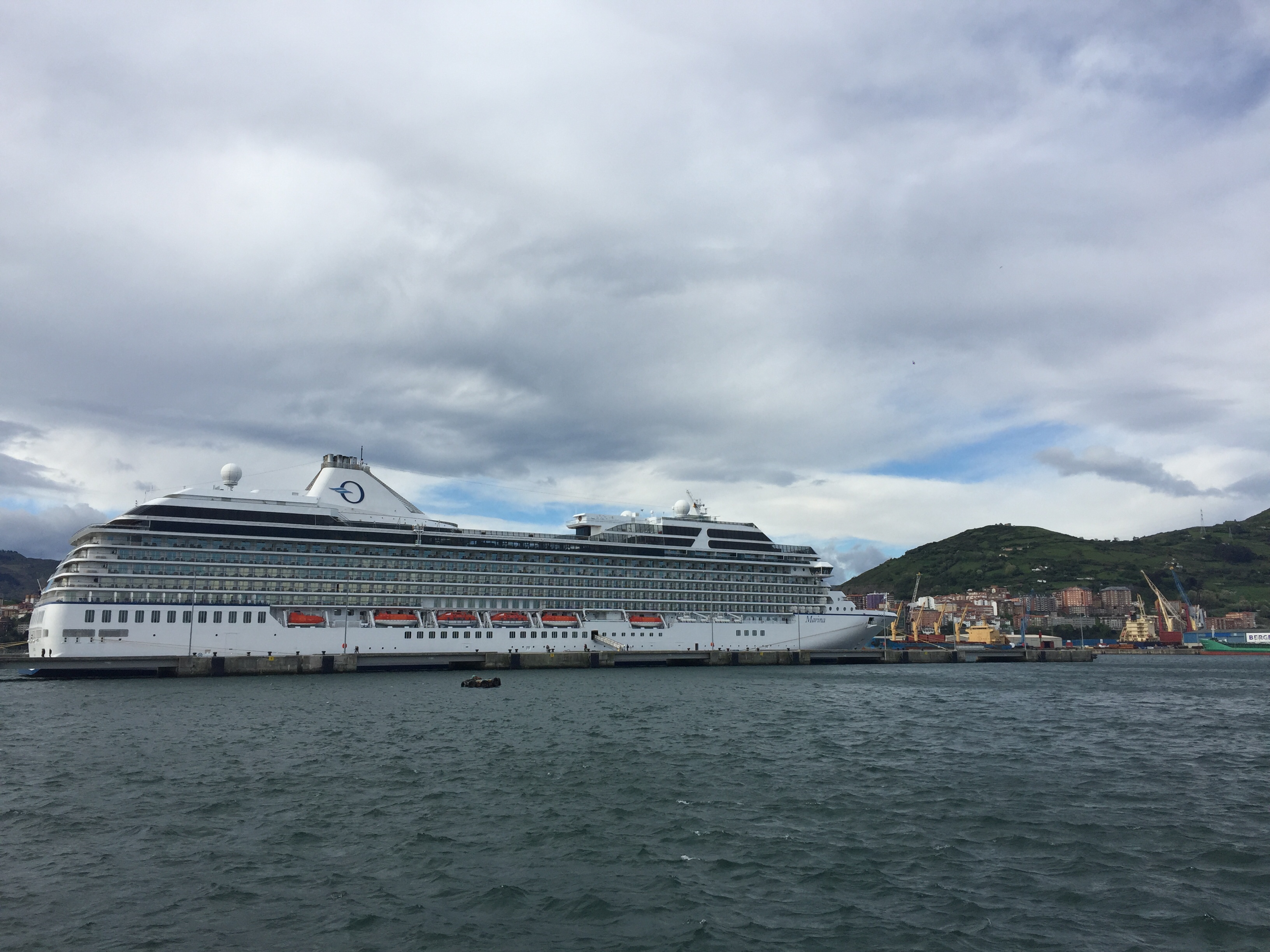
The Marina is a lovely ship. It takes around 1200 passengers and was launched in 2011. Later this year it is going in for a refurbishment so it will be all spruced up. We love travelling on it and all of the crew are superb.
Those are the steps to the fishing village. Too much for my old knees, I reckon!
See that red and white house on the top of the cliff. I reckon that would be a great retirement home for me. Great see views! And it’s red! But look at those steps to get up to it! Oh well, never mind.
So I love the Basque Coast of Spain. San Sebastián and Getxo are both so pretty. I’m sad we missed seeing the French Basque Coast but still we are so lucky to be here.













 Dapper Dave and Dinky Di