A couple of weeks ago we received an invitation to a luncheon from Oceania Cruises. We thought we’d go along ….. It would probably be finger food and we’d stand around for an hour or so, trying to juggle glasses of wine and plates of food as we chatted to fellow Oceania cruisers before hearing the promotional messages but it would be OK.
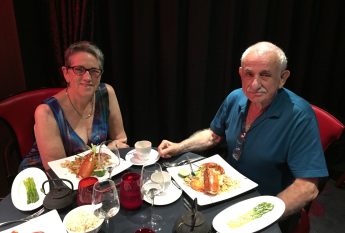
So we caught the train into the city, found 480 Queen Street and caught the lift to level 4 and entered Otto Ristorante, a beautiful Italian restaurant with a view of the Brisbane River and the Story Bridge.
This was a special, sit-down, a-la-carte meal with lovely wines. It was Oceania thanking some 60 of us for being loyal Oceania cruisers. The food was delicious as you would expect of a company which promises the finest cuisine at sea. What’s more, they did not use it as an opportunity to sell more cruises.
We were very impressed with the restaurant too. It is a beautiful venue and the food and the service were great. We’d like to return.
So, thank you Oceania. We really enjoyed ourselves.
Last Thursday we went to the movies at Cineplex Victoria Point to see Judi Dench in Red Joan and we really enjoyed it. This is our favourite movie theatre with very comfortable seats and plenty of room to stretch your legs and it is so much cheaper than other theatre chains. Parking is easy too. So why would you go anywhere else?
The movie is based on a book of the same name by Jennie Rooney inspired by the life of Melita Norwood who was a secretary at the British Non-Ferrous Metals Research Association. In the movie, Joan is befriended by communists whilst studying physics at university. She becomes secretary to a physicist researching the atomic bomb and leaks documents to her friends.
The movie begins with the arrest of the elderly Joan who is played by Judi Dench. We thought it was a great role for her and we really enjoyed the movie.
Today I joined my fellow members of the Redlands Genealogical Society on a tour of this village and it was definitely a walk down memory lane.
It is a heritage village and living history museum dedicated to preserving the cultural heritage of the Beenleigh region for current and future generations to enjoy. Beenleigh is situated between Brisbane and the Gold Coast & it took me about 45 minutes to drive there this morning. It brought back a lot of memories and was well worth the drive. We began our visit with damper and a cuppa which we had to have inside because of the rain.
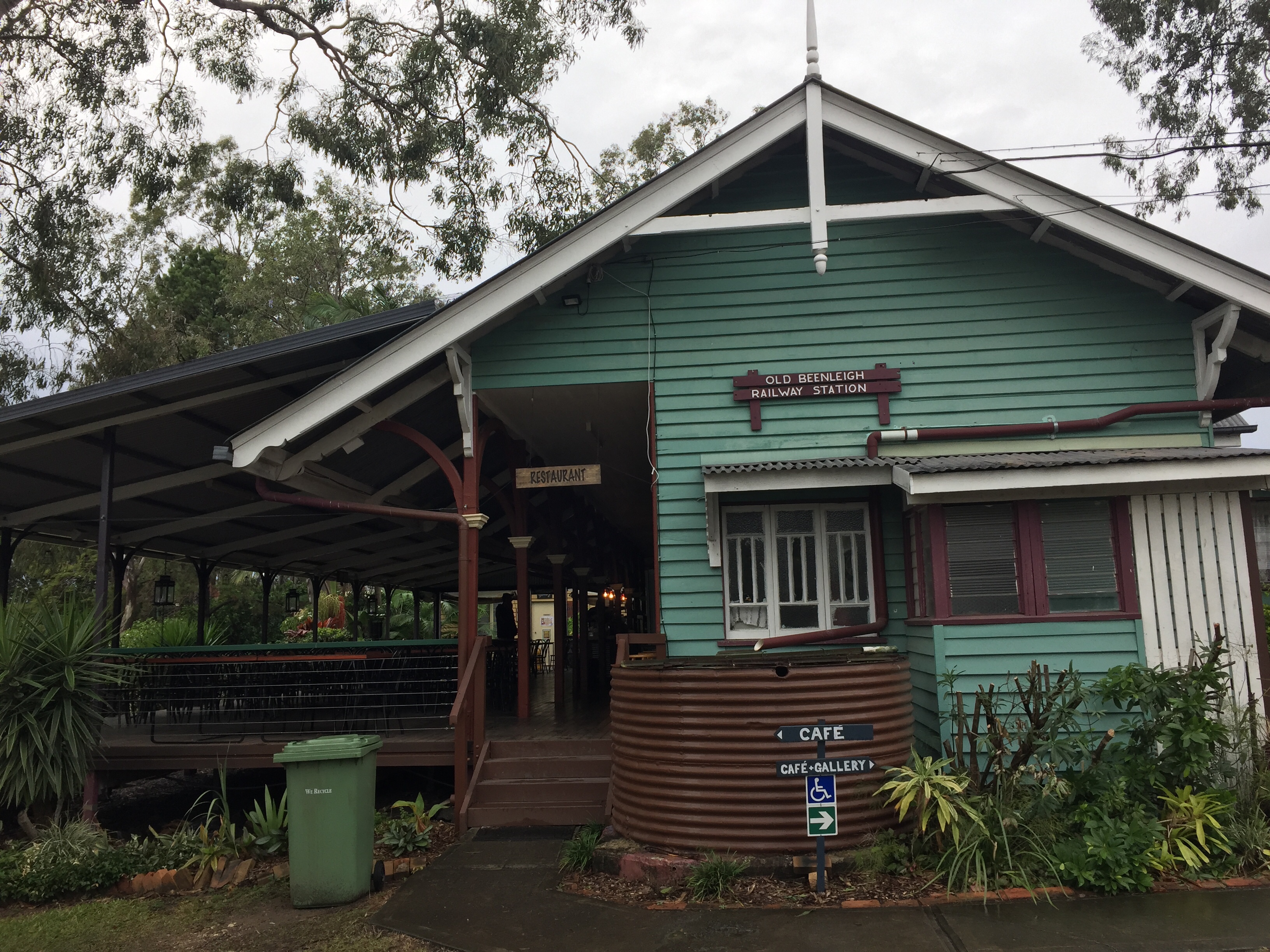
There are quite a number of old buildings making up the village and they are well cared for by the amazing team of volunteers. The old Beenleigh railway station is so typical of those of its time and you can find them scattered throughout Queensland.
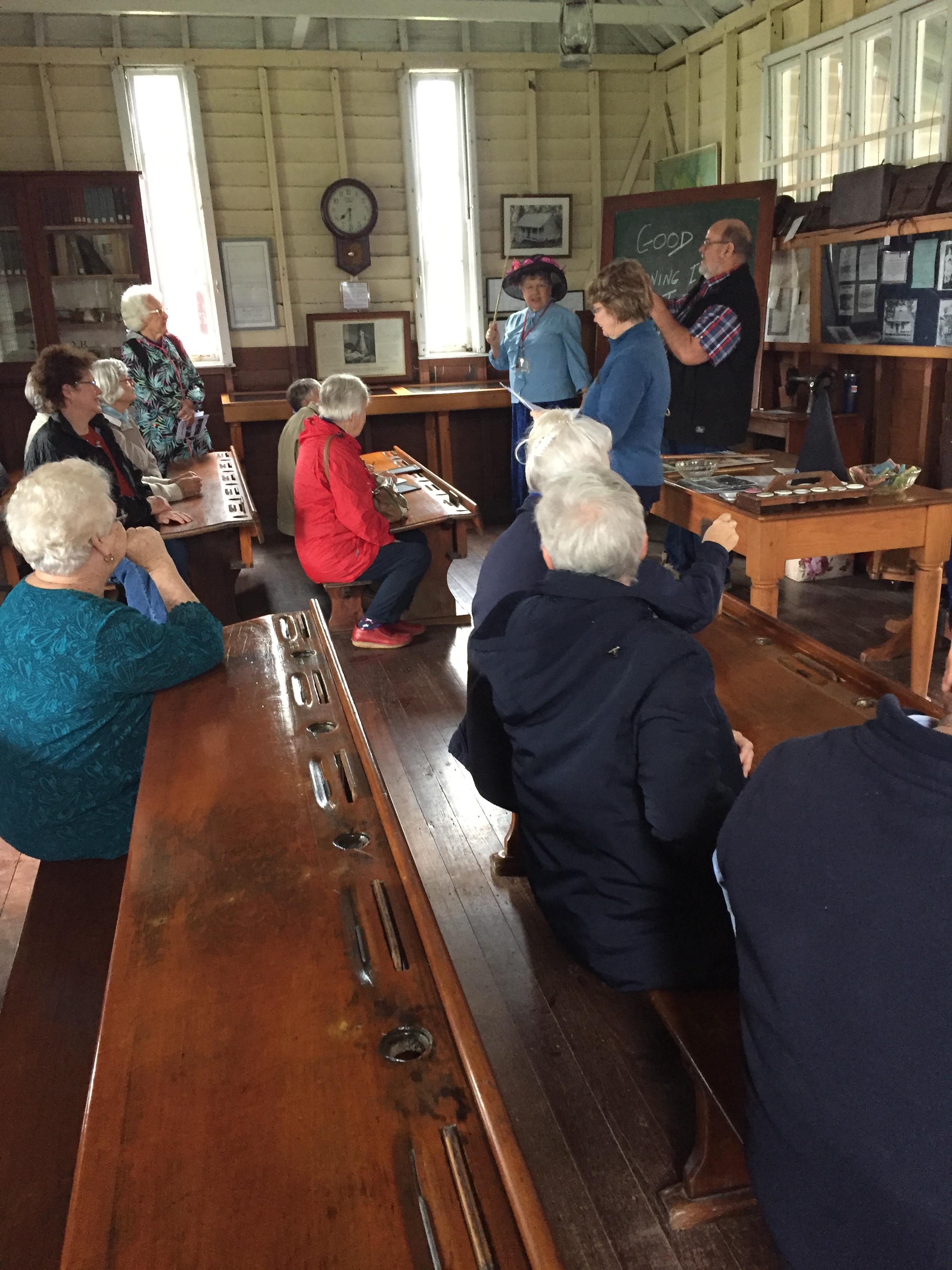
I especially loved the old one-teacher school. I didn’t attend this one which was moved here from Loganhome but I did attend similar ones in Hivesville and Jimboomba, both small country towns in South East Queensland and my daughters attended one in Branyan, near Bundaberg. Jimboomba is no longer a small country town but is quite a metropolis and The Branyan State School has grown into a much bigger school.
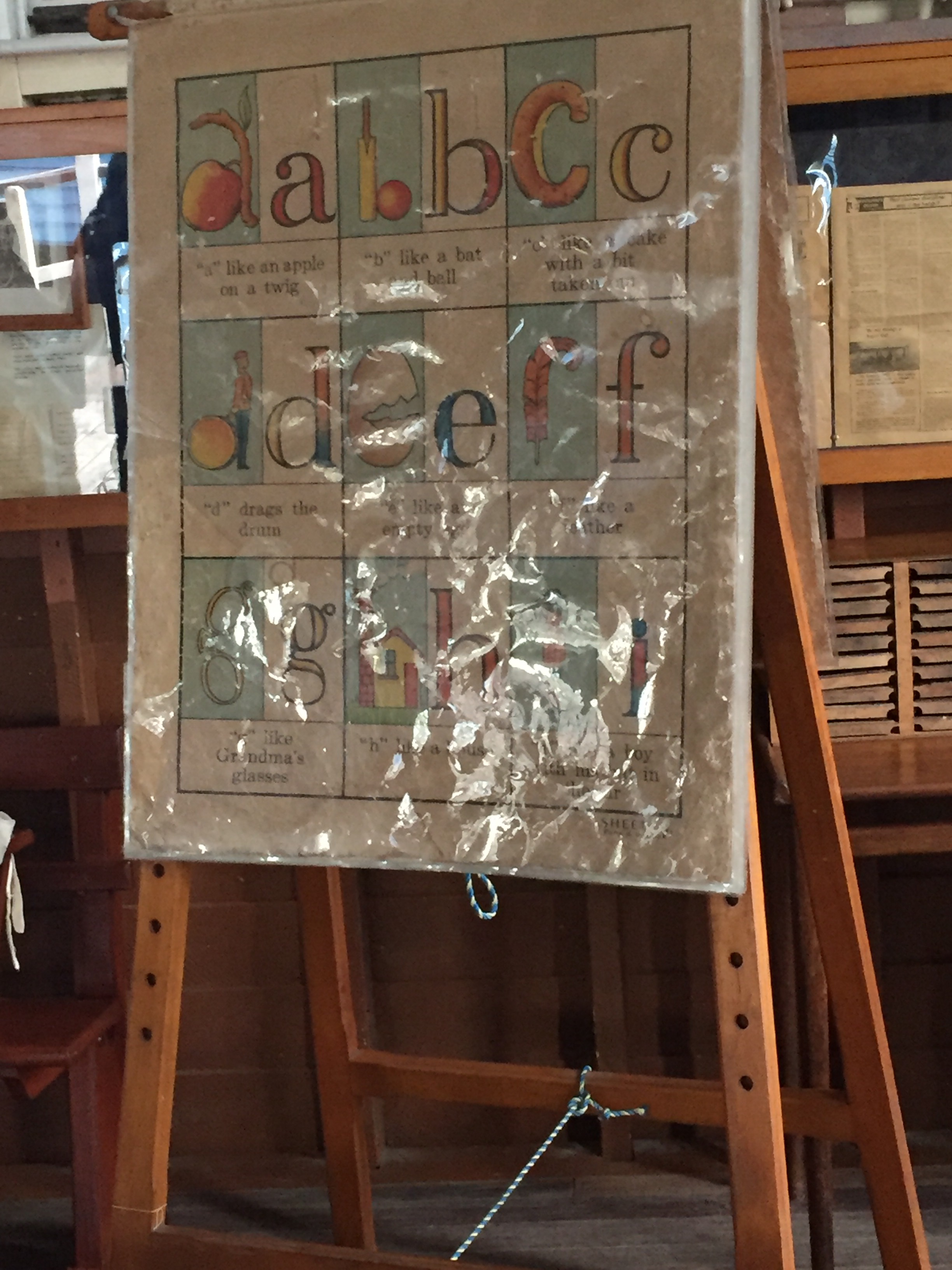
It was fun to slide into the old-style seating, pick up a slate pencil and write on the slate. I think we used slates until grade 3. We checked out the holes in the desks for the inkwells and reminisced about the cheeky boys dipping the girls’ plaits in the ink well. The Queenslanders amongst us could recite the words on the letter chart: b like a bat and ball and b says ‘b’.
I seemed to be the only one who could remember writing out the good manners chart, pictured above, for talking in class but we could all remember getting a smack over the knuckles with a ruler for talking.
This is a ‘Rural School Building’ which was moved from the Beenleigh Primary School. I went to Caboolture Primary School for grades 4 to 8 and we had a Rural School there too. Kids used to come in by bus from all the little schools around. In grade 6, we learnt ‘milk and cream testing’ which involved using pipettes and a centrifuge etc to measure the fat content of the milk and cream. I’m not sure if this was meant to prepare us to work in local dairies or just interest us in science. Looking back, it does seem a bit strange but I did enjoy it. In grades 7 and 8 we learnt cooking and sewing at Rural School and the boys did metalwork and woodwork. I think it was for one afternoon a week. I remember we had to write up our recipes very neatly and find a picture of what we were cooking and it was marked out of 10. I enjoyed the cooking but showed no skill at all with a needle.
This is a page out of one of my books – it’s a bit yellow with age but I still use some of the recipes occasionally. I would have been pleased with the mark of 8.5 out of 10.
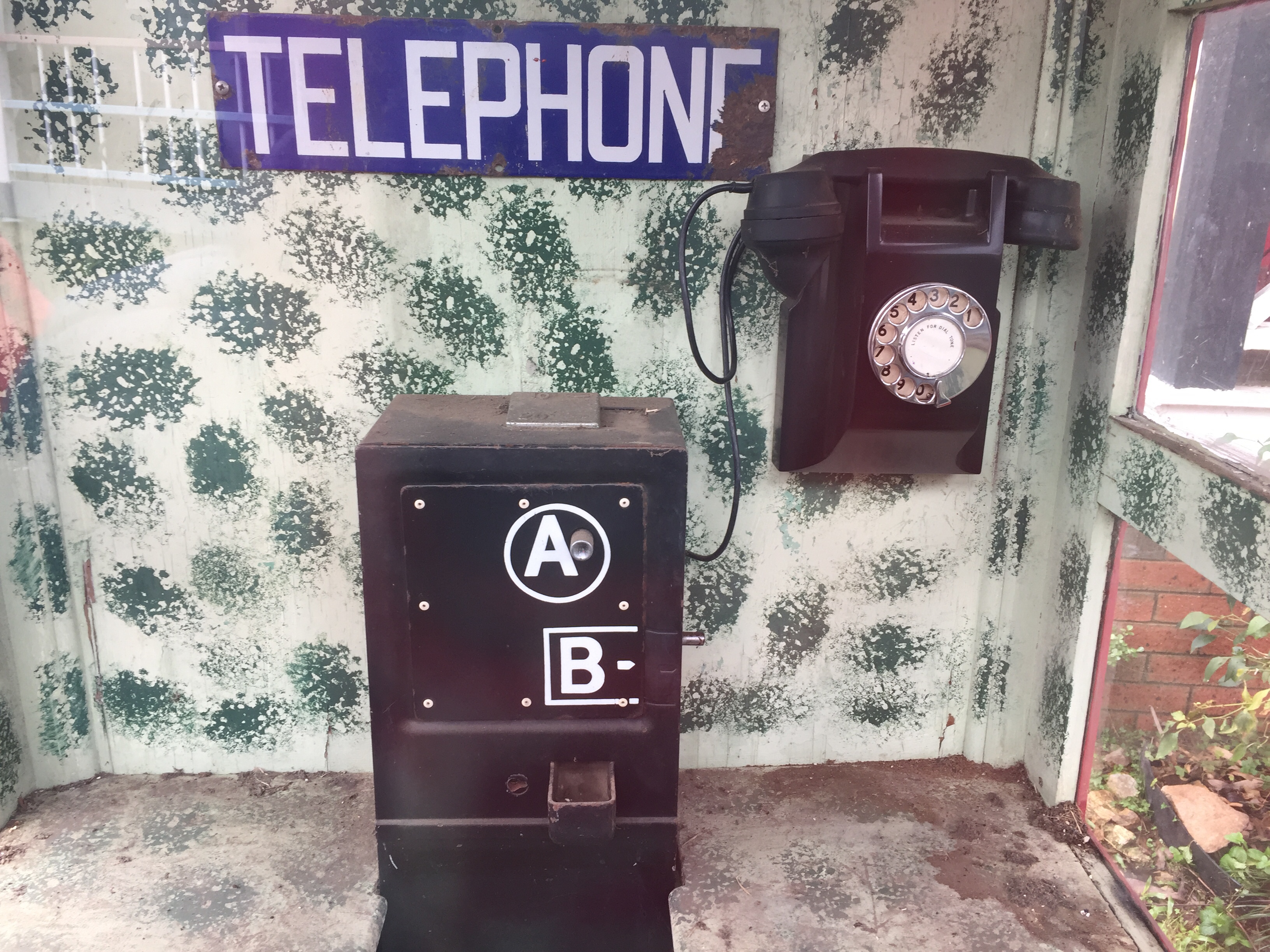
This morning there were plenty of ‘I remember doing……’ or ‘Remember that’ moments. We could all remember trying to make a phone call from a public phone box and hearing the operator telling us to press button A to be connected or press button B to get your money back and being frustrated when you ran out of coins. Mobiles make it all so much easier. There’s all sorts of memorabilia. It was fascinating.
So fascinating that I think I’ll take my grandkids there next week in the school holidays. They will enjoy lunch in the Tin Cup Cafe too as we did before coming home.
I’ve just read the third novel by Jane Harper, The Lost Man. Like The Dry this one is set in the Australian outback, this time in South West Queensland rather than Victoria. Life on a cattle station in the outback is a struggle for all. One of the three brothers is found dead of dehydration in the scorching Christmas heat beside an old stock man’s grave and no one understands why he would have left his vehicle with all his food and water to walk ten kilometres to this headstone.
The story delves into the tensions around families at Christmas and how these tensions are magnified by the death. We go back into the past to enable us to understand the present. It was an excellent read, as was The Dry. I didn’t want to put it down.
Last week we flew to Townsville where my daughter picked us to drive us to Ayr where she teaches Japanese. It was Friday night so first we went to the CBar on the Esplanade in Townsville for a Friday night drink. For dinner, we chose to go to A Touch of Salt which turned out to be a great choice. I really enjoyed my sand crab and scallop dumplings although David wasn’t overly impressed with his beef short ribs. Jac had vegan dumplings and they were good too.
Ayr is about an hour south of Townsville usually but, at the moment, roadworks are slowing it down.
Staying in Ayr is very relaxing. It’s a small country town and everything is within walking distance. Everyday we would wander up the street to our favourite coffee shop, Chill, for our caffeine hit. We went to the movies to see Rocket Man which we all enjoyed. I usually manage to find something that takes my fancy in the little boutiques and this time, I found a groovy, bright comfortable pair of pants that were actually made on the Gold Coast.
I visited the Japanese classroom at one of the school and it looks a very inviting environment in which to learn about the language and culture of Japan.
It was a lovely week staying with my daughter and I look forward to returning soon.
Last week I read The Last Mile by David Baldacci. Melvin Mars is going to be executed for the murder of his parents twenty-one years ago. He’d had a promising career as a footballer ahead of him when he was arrested but just as he was about to be executed another man confessed to the murders.
Amos Decker had just joined a new team in the FBI to investigate old murders and he convinced his boss that the team should work on this case to find the truth of what happened. The story unfolds from there.
It’s interesting and very easy to read. I read it in a couple of days and enjoyed it.
I think it is probably twenty-five years or so since I first read a novel by John Grisham and I remember particularly enjoying The Pelican Brief and The Client amongst others. He was one of my favourite authors.
A couple of weeks ago I found his 2017 novel, The Rooster Bar in our bookshelves so I decided to read it. It’s a story about three final year law students in America, each of whom have racked up a $200,000 loan for their university fees. They’ve been conned into attending a second rate law college and are unlikely to ever be able to repay the loan as they have no hope of getting a job in a law firm.
They decide to practice law illegally without the qualifications and that is where the trouble starts.
I enjoyed the book but it wasn’t one of my favourites. I wouldn’t want to read it again and I wouldn’t recommend it to you.
I have just read Boy Swallows Universe by Trent Dalton. Trent is a Queensland journalist who has written for The Brisbane Times and The Courier Mail and now is a feature writer for The Weekend Australian. He has won many awards for his journalism and now this, his first novel, based on his life growing up in Darra in suburban Brisbane in Australia, is also winning awards.
This is a graphic novel about coming of age in a outwardly dysfunctional family where there’s plenty of love but also crime, drugs, domestic violence, social suffering, alcoholism, prison and prison escapes but always there was the dream of becoming a journalist & getting the girl.
Trent’s words carried me along so quickly. His descriptions are different but so clever. I found it riveting. I can’t imagine how people can live through what that family lived through and come out the other side. But they did. It’s an amazing story told brilliantly.
This is a story about another of our relatives whose WWI story we followed when we were in France last month – Robert WACHMAN, David’s second cousin once removed.
Robert was born in Dublin Ireland in 1894 to Moshe WACHMAN and Seina (Sina Tzia bat Rachel Leah) JACKSON. This gets a bit complicated but Seina’s mother was Rachel Leah Wachman who married Urel Jackson. Rachel is the sister of David’s great grandmother Tsipe Wachman. If you’ve been following my blogs for a while, you’ll remember that this was the massive brick wall I had in trying to discover the link between Moshe and Tsipe. Well, we think there is a double link in that Seina is Moshe’s cousin. Anyway, as I said, that’s complicated. Enough to know that David and Robert WACHMAN are definitely cousins.
Moshe was born in Tels Lithuania in 1865 and Seina in 1871 in Memel (now Klapedia) Lithuanis. Somehow they both arrived in Dublin where they married in 1885 and started their family. Robert had two older brothers also born in Dublin – Abraham (1891) and Simon(1892). The family then migrated to Capetown South Africa where they had four more children – Edward (1899), Harry (1901), Albert (1903) and Saidie (1904).
They then migrated to Australia arriving in Albany Western Australia in May 1905. Ernest was born in Broken Hill on 7 May 1907 and Betty was born in Australia somewhere in 1909.
So, now to Robert, himself. in 1914 at the outbreak of war, he was a traveller, according to his army record. We presume that means what we used to call a “commercial traveller” and we get a further clue from an item in the Melbourne Herald on 28 May 1914 stating that he and his brother, Simon, applied for a patent (No 12757) for a “push coin vending machine”. I am unable to find further information on the success of this patent and I wonder if anything came of it.
He enlisted in the AIF at Blackboy Hill, east of Perth, on 25 November 1915 when he was 21 years 8 months old and living at 258 Newcastle Street Perth Western Australia. On 10 February 1916 he is shown as being a member of the 16th Battalion 15th Reinforcements. Blackboy Hill seems an interesting place. It was the birthplace of the Australian Infantry Force (AIF) in Western Australia and over 32 000 men did their basic training there for about 10 weeks before heading for Egypt or England. Because of the number of casualties on the battlefields, some battalions had up to 27 reinforcements of 100 men in training here, ready to head overseas. Robert was 5ft 7ins (170cm) tall and weighed 158lbs (72kg). He had black hair, brown eyes and a dark complexion and was of the Jewish faith and he noted that he was a British subject. I think this is because his father was naturalised in South Africa when he was still a minor. His next of kin was his mother, Seina who was living at 137 Lake St, Perth.
On 12 February in Freemantle he embarked on the HMAT A28 Miltiades and he shows on the Australian War Memorial Embarkation roll number as 23/35/3. He joined the 14th Battalion 16th reinforcements on 13 February 1916 and he disembarked at Port Suez on 11 March 16. On 14 May 1916 he was allotted to the 12th Training Battalion at Tel-el-Kabir and it was here that he was awarded 28 days punishment on 28 May for refusing duty and insolence to a Non-Commissioned Officer.
He was transferred to the 48th Battalion, part of the 12th Brigade 4th Division, on 2 June 1916, the day that he embarked on HMT Caledonia at Alexandria. He arrived in France at Marseille on 9 June and they went to the Nursery Sector, to an area around Bailleul, a French Flemish town close to the border with Belgium. The Nursery Sector was so named because it was supposed to be relatively quiet and an area where units new to the Western Front could be sent to get ready for trench warfare. Whilst here they visited the front line trenches at Houplines. In July they were under heavy shelling form the Germans in the Fleurbaix area and were moved by train from Bailleux to Doullens, about 100km south in the Somme.
In July 1916 there was intense fighting around Pozières in an attempt to capture Old German Lines (OGL) 1 & 2. By August 6 and after 10 days of fighting, the Australian 2nd Division had lost 6848 officers and men and it was replaced by the Australian 4th Division which included the 48th Battalion and Robert Wachman. On 8 August, they captured OG1 & OG2 but suffered heavy casualties with 102 killed, 404 wounded and 76 missing in action (MIA). Many were shell shocked and the battalion numbers were very low. They were moved to Albert on 16 August and marched to Warloy Baillon and then back to Albert but by the end of the month they were back near Pozières attacking Mouquet Farm.
On 2 September they were moved back to Albert and from there travelled to Belgium where they had huts and tents, were able to wash and change their socks. What a relief that must have been! They had a church parade – I wonder if there was a Rabbi amongst the chaplains? In October they were at Vierstraat in Belgium at the front but were not in the action. They were billeted in Boeschepe and then moved to Villers sous Ailly where they were also billeted. They were cleaning up the streets and here they were able to attend a concert which was held in a barn.
November saw them moved from Villers sous Ailly to Berthencourt where they were billeted and underwent training and then moved to Vaux which was a good area where they underwent training and even played football. They were then moved to Dernancourt where the billets were poor and extremely dirty. They were cold and wet. Then they moved to Fricourt and then to Switch Trench at Flers which was a very bad area where they dug trenches in the mud and water. They saw action at Flers and here conditions were so bad it was not possible to give the men a hot meal whilst in the firing line. Rain was torrential and the mud was up to the men’s knees. This was the start of the worst European winter for 40 years. To move from rear camps up to the front line with full pack on, the men could take 6 hours to cover the 3 kms so bad was the weather and the mud. Sleep was impossible in the trenches and men could have to remain standing for the full 24 hours as they couldn’t lie in the mud.
The 48th then moved back to Mametz in the mud over bad roads. In December they were in Dernancourt where they were visited by General Birdwood, the British Officer who was in command of the Australian and New Zealand Forces at Gallipoli and on the Western Front. The Battalion was moved to Flesselles and then to Vigancourt and in both places were billeted.
On New Years Day 1917, the Brigade held a sports day and the 48th was the successful battalion winning most events. On 2 January, they marched to Franvillers, a distance of 14 miles in full kit in 6.5 hours. The official war diary states that the men marched well – no one fell out. On 3 January, they marched from Franvillers to Dernancourt in 3.5 hours and again, no man fell out. On the 5th they marched for three hours to Fricourt along roads that were very difficult to march on and again no one fell out. Here they were joined by the 25th reinforcements. On this day, Robert Wachman is promoted to Corporal (Temporary). On the 6th, they marched to Bazentin, back near Flers, and took up lines near Gueudecourt. They moved forward then to support the lines at Bulls Road.
The war diary for the 8th is very interesting to read. All cooking was done in Flers and carrying parties carried the two meals per day to the men in the trenches. This took 3 hours each way each meal. The men were also given hot soup at 3am. Their wet socks were sent back daily and dry ones provided. On the 9th, an easier route was found for the carrying parties and the return trip took only 2.5 hrs. There was heavy artillery fire from the German lines.
On the 10th, it appears that there was debate about how the meals should be delivered efficiently but there is conviction that without hot food helping to keep the men warm and fed, they would not be efficient. Army rations would not be enough. On the 12th enemy artillery fire is heavy and three men are killed – one is buried for 7 hours under debris. Some men are suffering from trench feet with the extreme cold even with the dry socks.
By January 12, the problem with trench feet had become worse with two men evacuated. The other sufferers go to the Battalion Rest Station where the Medical Officer is pleased with the results of a new powder they have been issued with. The porters carrying supplies leave at 5pm and finish their second trip about 5am as it all has to happen under the cover of darkness. Three men are evacuated with mumps. The 15th saw heavy shelling and headquarters was hit and a store containing gum boots was blown up. After 10 days at the front, the 48th was relieved by the 47th at 7:45pm. The men moved to Brisbane Camp and there was a heavy fall of snow.
On January 19, fatigues arrived and all men had a bath and a clean set of clothes. All rifles were cleaned and inspected. I can’t begin to imagine how good that must have felt. I imagine it took a lot of soaking and scrubbing to remove the mud from their poor tired bodies.
On 24th they moved into Bazentin Camp where it was still very cold and the snow was still on the ground. The men worked on the roads and the rail tracks. The diary of the 31st states that the Australians are not used to the extreme cold and they need sufficient fuel to allow them to have a stove to keep them warm and get them ready for their next tour of duty. The lack of sufficient food and heating is not good.
In February, the 48th continued with the railway work and moved to the Albury Camp, to the Flers Sector and then to Bulls Trench and back to Mametz.
During March the weather was still extremely cold and the men were busy cleaning arms and equipment and training. They were wet and cold. On March 17, Robert Wachman was promoted to Corporal.
On 1 April, they marched 6 miles into to an area near Bapaume with full pack and one blanket. It was wet and cold. The men then worked on fatigues. The officers undertook some training on the 5th and then inspected the frontlines at Bullecourt and Noreuil on the 6th. They arranged to relieve the 52nd and did so on the 8th. The next day was quiet and some patrols went out into enemy wire at Bullecourt and discovered that the barbed wire was strong. Bullecourt was part of the German’s defence lines known as the Hindenburg Line and the Allies wanted to break through thi s line
On April 10, the 46th and 48th Battalion were ordered to attack enemy lines on a frontage of 600 yards. The battalions were to be in position to attack in conjunction with the tanks at 4:30am. There was to be no artillery fire so as to surprise the Germans. But the tanks failed to appear and orders to retire were given at 5:30. This had to happen in daylight in full view of the enemy. There was a barrage of enemy fire and five men were killed and 17 wounded.
The attack on Bullecourt did take place on April 11. It was timed to occur at 4:20 but the tanks were late and slow at moving forward so the 48th couldn’t attack until 6:19. This meant that the men were exposed to heavy rifle and machine gun fire and the battalion suffered heavy losses – 14 Officers and 421 men. They breached the enemy position and held it for 70 minutes despite the withdrawal of the other battalions on their flanks. They retired in an orderly manner but were unable to collect the wounded and the dead. A very sad day for Australia.
Sadly, Corporal Robert Wachman was one left behind. He was reported Missing in Action (MIA) on 11 April 1917. He was one of the 3000 casualties of that battle. Another 1170 men were taken prisoner.
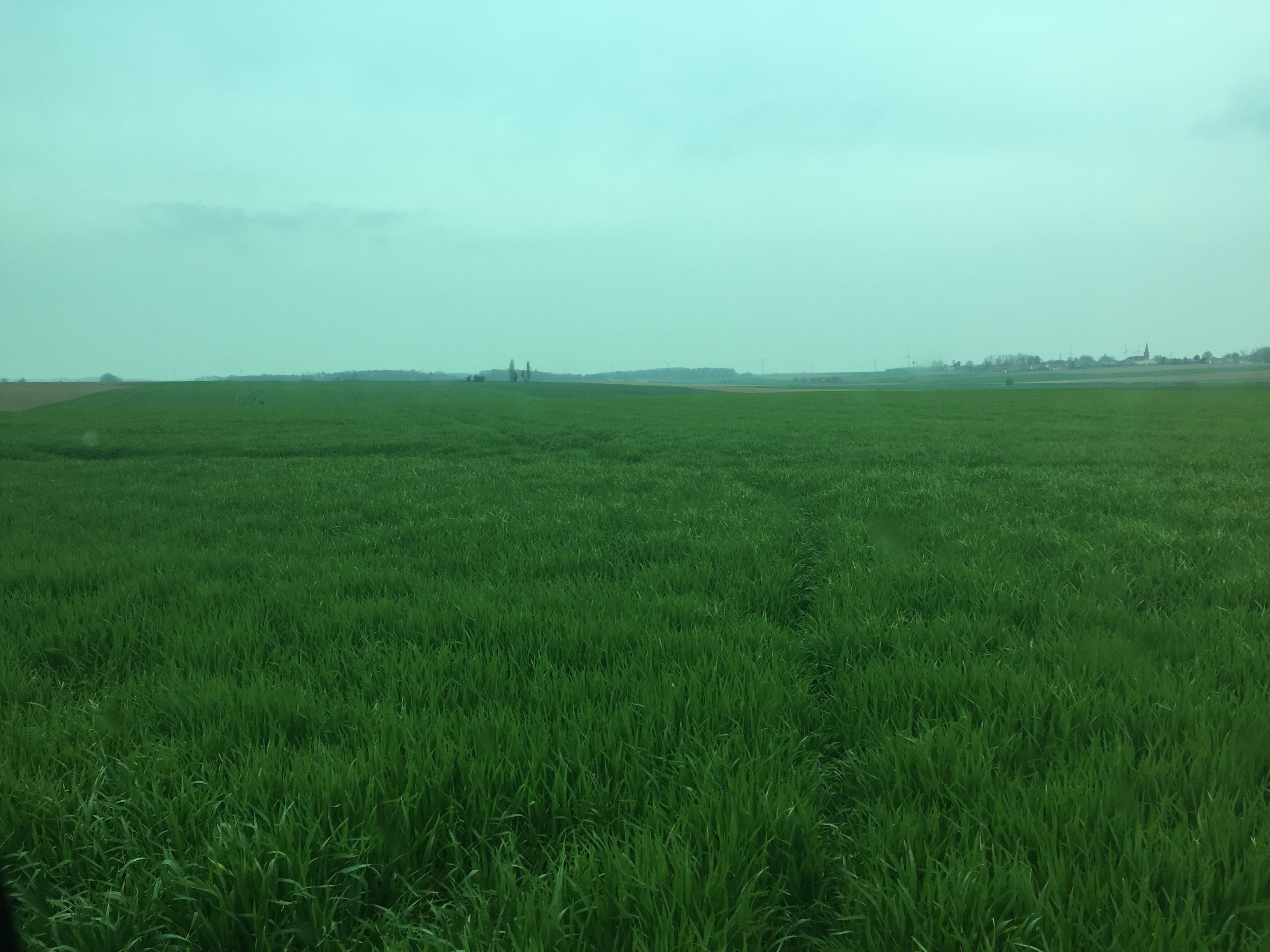
The field at Bullecourt where it is thought that Robert’s body lies.
His brother Simon who was in the Transport Section of the 44th Battalion was making enquiries in July 1917 to try to find out what happened to his brother.
His mother, Seina, was his next of kin and on 23 January 1918 she wrote to the army requesting information on Robert’s whereabouts as she had been informed that he was MIA. She received an answer on 30 January saying that there was no further information.
It wasn’t until the 8 March 1918 that Simon received notification that Robert had been killed on 11 April. The Australian Red Cross Wounded and Missing Enquiry Bureau Files contain a statement by Second Lieutenant Brockelberg that Corporal Wachman was badly hit and subsequently died at Bullecourt on 11 April 1917. It’s awful to think of those men lying wounded in that dreadful field and being left behind as their mates retreated.
His effects were returned to his mother on 21 February 1918. All she received were some letters and a book of views (postcards maybe?). She received a pension of 30 shillings per fortnight.
A memorial to the Bullecourt DiggerA digger wearing full pack at the Bullecourt Memorial
He was entitled to two medals: the British War Medal and the Victory Medal and although Seina was his next of kin, his medals were sent to his father, Moshe, on 23 January 1923 as that was the law at that time.
Robert’s name on the Australian War Memorial at Villers Bretonneux. Myriam of Walkabout Digger Tours and David Edelman are pointing to his name during our visit in April 2019.
Visiting the battlefields and war cemeteries of the Somme and learning the stories of those brave men who suffered so much in the mud and the cold under enemy fire is heartbreaking. The noise must have been deafening, the smell horrible, their homesickness overwhelming, the mud suffocating, the cold and wet intolerable….. How did they do it?
I wonder what Robert would have achieved if he had made it home? Would his patent for a push coin vending machine have been developed? What else would he have patented?
If you think about all the young men and women killed in wars and you ponder what they collectively could have achieved, it really is mind-blowing. What a waste!









 Dapper Dave and Dinky Di